
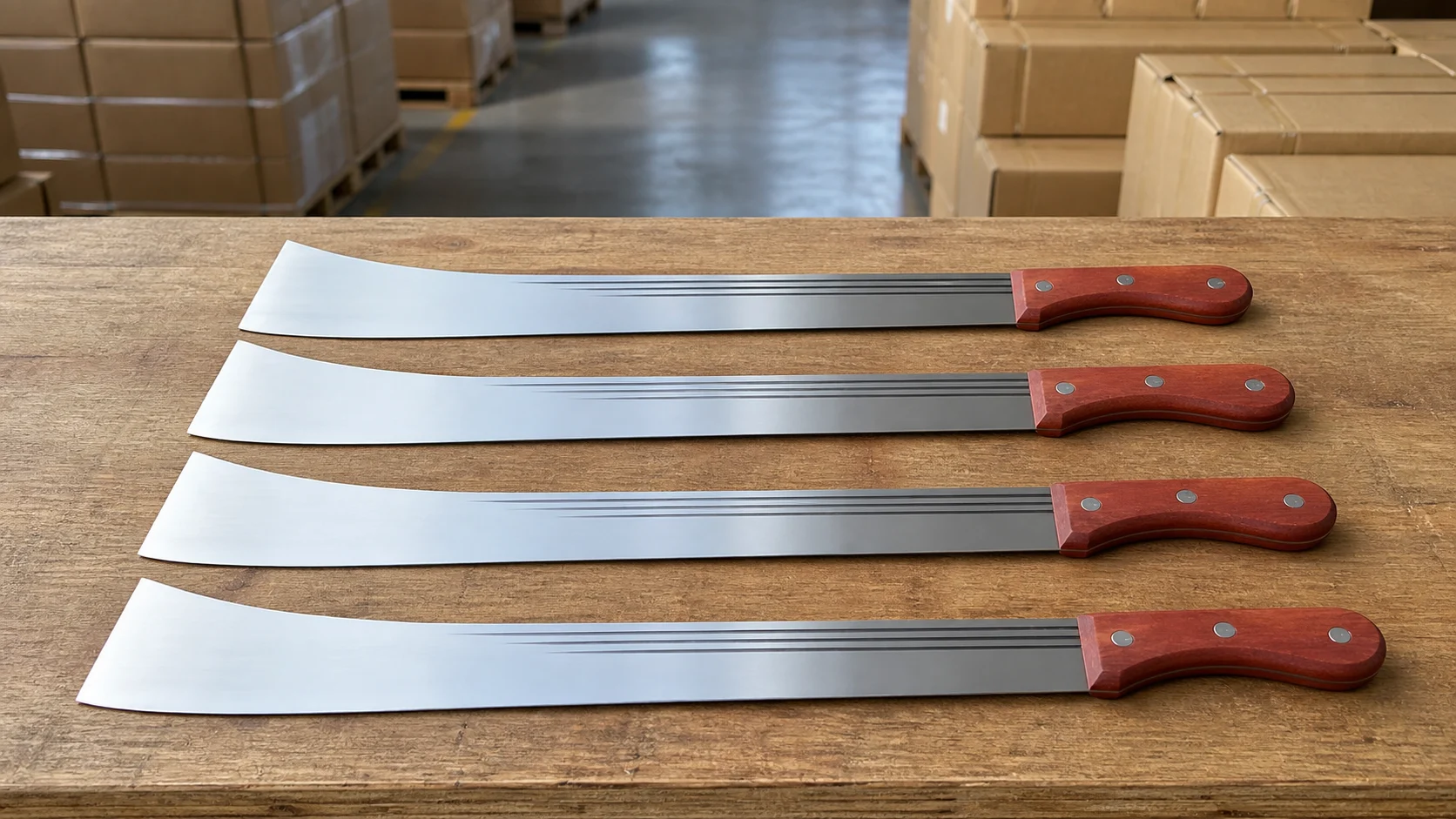
Steel Machete M206 is a distinct long-blade option for buyers building a practical agricultural cutting range, supplying farm-tool distribution, or adding recognizable machete lines to a wider hardware order. The product record identifies a carbon steel blade and an M206 profile, with length to be confirmed for the destination market. Its reference image shows a bright silver blade with a widened, gently curved front tip and a red-brown handle secured by three visible rivets. Those visible details are a useful starting point for a specific inquiry, sample review, and repeat-order record.
The Steel Machete M206 product page should be used as the model reference rather than a generic request for a long machete. Send the selected image together with the required blade length, edge direction, handle requirement, quantity, packing preference, destination market, and any carton-mark instructions. A purchasing record that keeps those points together is far easier to quote and repeat than an order described only as “machetes.”
Read the M206 profile before comparing prices
Machetes can look similar in a catalog while differing in blade profile, tip width, handle construction, finish, and packing format. M206 should therefore stay on its own SKU line. In the supplied reference, the blade is long and bright, then broadens toward a curved outer tip. The handle is red-brown in appearance and has three visible rivets. A buyer should check that the approved sample follows this overall silhouette and handle reference before using it as the basis for a bulk order.
Do not infer a confirmed steel grade beyond the listed carbon steel blade, exact thickness, hardness, weight, or cutting performance from a product image. Those details must be requested when they are important to the buyer’s application. The useful commercial description is the M206 model, required length, approved blade profile, surface direction, edge condition, handle configuration, packing, and quantity. This leaves less room for a near-looking blade to be substituted during later order discussion.
Confirm the handle as a visible product feature
The red-brown, three-rivet handle shown in the M206 reference is part of how this model is recognized in a retail or wholesale range. Ask for clear sample views of both sides of the handle, the rivet positions, the transition from blade to handle, and the end profile. If the buyer requires a particular handle material, color, texture, label position, or grip construction, those points should be confirmed in writing with the sample. The image is a visual reference, not a substitute for an agreed material specification.
Keep those requirements separate from similar machete lines. The earlier Steel Machete M120 buying guide covers a different reference: a dark blade finish and a black three-rivet handle. M120 and M206 may be ordered in the same program, but they should not share one loose description, sample photo, sleeve instruction, or carton code. Separate product records make receiving, merchandising, and reorder checks much clearer.
Set the blade and edge direction at the sample stage
For M206, review the full blade outline before approving packing artwork or bulk production. The photo set should show the blade face, the widened front section, the outer tip, the edge side, the handle, and a full-length view. If length is market-specific, state the requested length on the inquiry and have it checked against the sample. If the buyer needs a particular edge preparation, state whether the selected order calls for a market-ready edge, a protected edge for local finishing, or another agreed condition.
Blade appearance also needs a direct instruction. The product reference has a bright silver look; where surface finish affects the sales presentation, ask for the approved finish direction in the quotation and sample notes. Avoid describing a finish as guaranteed based only on a photograph. A well-organized approval file uses the model name, product image, blade profile, required length, handle reference, finish direction, edge instruction, and signed-off sample as one controlled record.
Use sleeves and cartons to protect a long blade
Edge protection should be planned with the sales channel and loading arrangement in mind. Paper sleeves, cardboard blade covers, controlled bundle packing, retail sleeves, inner cartons, and export cartons can all be discussed according to the buyer’s needs. The goal is to protect the blade during handling, avoid contact damage between items, and keep warehouse staff safe when opening cartons. The right combination depends on the final length, blade condition, units per bundle, carton strength, shipping route, and destination handling practice.
For a retail program, the sleeve may also carry a label, barcode position, warning text, or buyer artwork. For wholesale distribution, buyers may prioritize bundle count, carton dimensions, gross weight, and clear SKU identification. Confirm these points before cartons are finalized. Each M206 carton should be easy to distinguish from other blade profiles, especially when several machete types are packed in the same shipment.
Ask for QC photos that match the approved M206 sample
A practical pre-shipment photo list should include a complete M206 blade profile, close views of the front tip and edge, the red-brown three-rivet handle reference, agreed length checks, edge protection, sleeve or bundle arrangement, inner packing where applicable, carton view, carton quantity, and carton marks. Request photos by SKU rather than a mixed collection of warehouse images. This gives the buyer a reliable comparison between the sample, packing plan, and goods ready for dispatch.
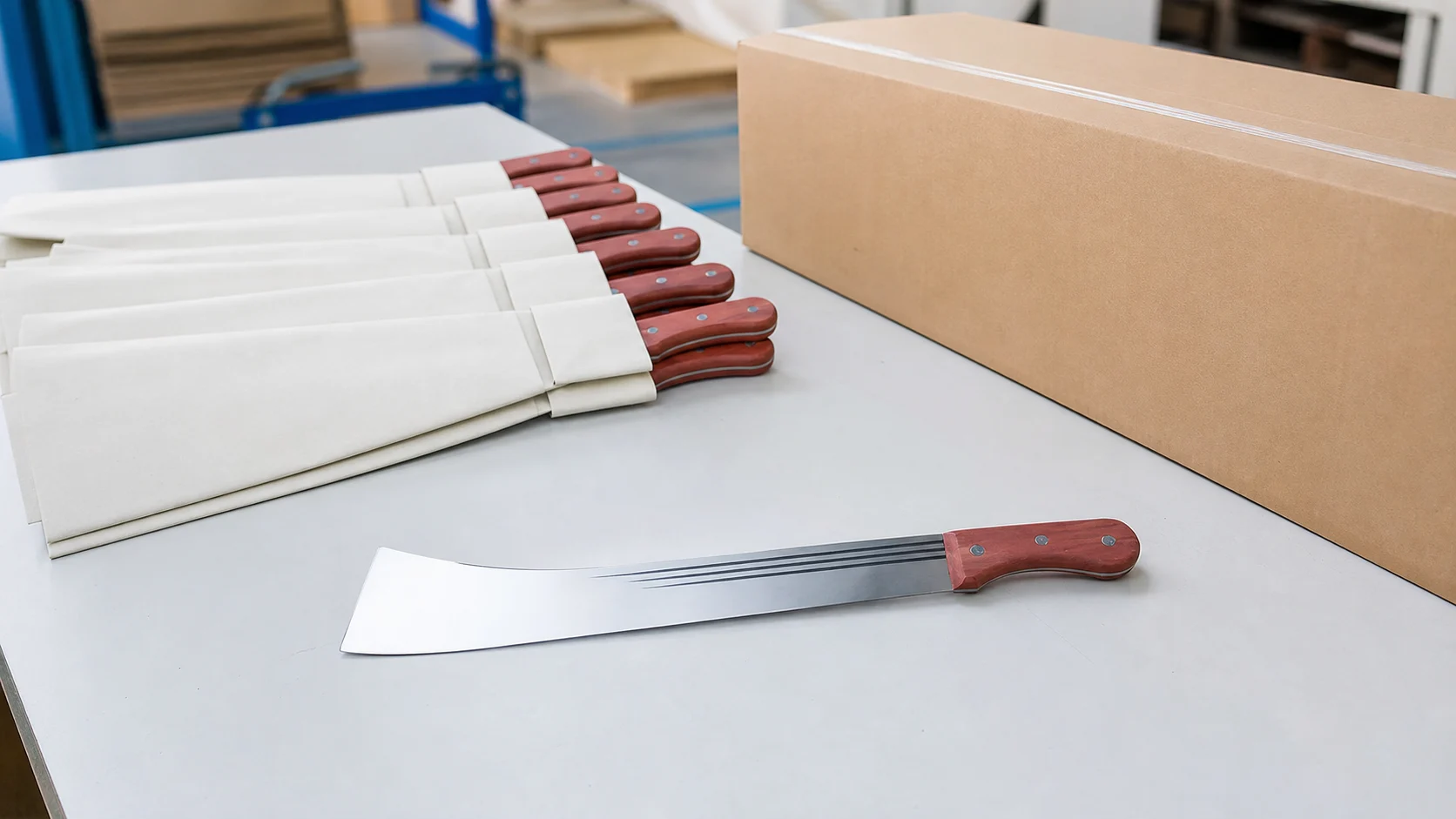
For larger buying programs, keep the photo and packing records beside the selected model. The Machetes category is useful for reviewing related profiles, but each model should retain its own image, specification notes, packing details, and sample status. This is especially important when multiple tools are ordered together for different retailers, distributors, or regional markets.
Add M206 to a practical mixed order
M206 does not require a standalone shipment. It can sit alongside compatible agricultural tools, garden tools, construction hardware, or cutting accessories when every item is specified separately and the packing plan accounts for sharp edges, carton weight, and loading sequence. The private-label and packing service can be used when buyers need to align approved product references with sleeves, labels, carton marks, or other market-facing packing details.
For an M206 quotation, provide the model reference, required length, selected blade and edge direction, handle requirement, quantity, sample request, sleeve or carton preference, destination market, carton marks, and the additional products planned for the same order. With that information, China Tools Supply can organize a focused sourcing discussion, sample review, packing confirmation, QC photo list, and shipment plan built around the buyer’s actual purchasing requirements.