
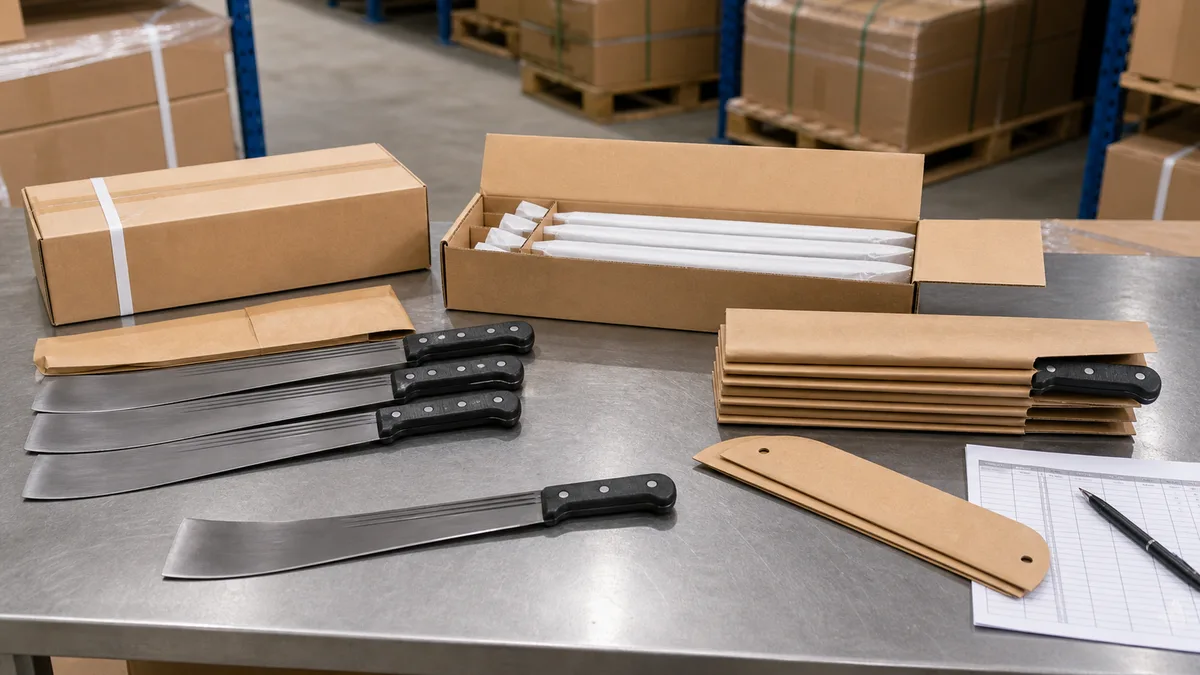
Machete orders need more control than a simple product name. A buyer should confirm the blade pattern, blade thickness direction, cutting edge, steel finish, handle material, rivet detail, paper sleeve or carton packing, warning label direction, and carton marks before comparing quotations. Small differences in blade shape or handle construction can change how the product fits the target market.
This guide focuses on Steel Machete M120, Model M120. The product record lists a carbon steel blade, M120 pattern, and market handle options by request. The reference image shows a broad agricultural machete blade with a dark steel finish and black handle with three visible rivets, making it suitable for a practical agricultural cutting range.
Why M120 should be treated as its own machete line
Machete buyers often compare several patterns in one order, but each pattern should stay as its own line item. M120 is not a sickle, pruning knife, axe, shovel, or generic hand tool. It has its own blade profile, handle shape, packing method, and buyer-side use case. Keeping the model separated helps the importer compare samples and repeat the same item later.
The wider Machetes category can include multiple blade shapes and handle types. For quotation clarity, M120 should have its own product photo, sample approval notes, blade finish requirement, handle detail, packing method, and carton data. This is especially important when a buyer is building a market assortment instead of ordering only one cutting tool.
Blade pattern, edge, and finish checks
The first confirmation point is the blade pattern. The buyer should confirm that the supplied sample follows the M120 profile shown in the reference image, including the wide front blade shape and the general cutting edge direction. The second point is blade thickness and finish. The product page keeps finish options open by request, so the inquiry should describe whether the buyer wants a dark finish, polished direction, painted surface, or another market finish.
The third point is edge preparation. Importers should clarify whether the order needs a market-ready sharpened edge, a safer semi-finished edge for local processing, or another agreed edge direction. Because machetes are handled and packed as sharp agricultural tools, edge protection and sleeve design should be discussed together with the blade finish.
Handle and rivet details
The reference product image shows a black handle with three metal rivets. This detail should be visible in sample photos and pre-shipment photos. Buyers should confirm handle material, handle color, grip texture, rivet count, rivet finish, and whether any label or warning text is required near the handle or sleeve.
If several machete models are ordered together, handle color and rivet style should be recorded model by model. This avoids mixing M120 with another pattern that looks similar in a small catalog photo but uses a different handle or sleeve format.
Packing choices for agricultural tool importers
Machete packing should protect the blade and keep warehouse handling safe. Common discussions include paper sleeve, cardboard blade cover, bundled packing, export carton, retail label, warning label, carton mark, and pallet arrangement. The right packing depends on whether the buyer sells through farm supply stores, hardware wholesalers, market distributors, or mixed agricultural tool programs.
For retail channels, the sleeve and label may need a cleaner presentation. For wholesale channels, carton strength, bundle count, and handling safety may matter more. If M120 is shipped with sickles, hoes, shovels, wire mesh, or other hardware items, blade protection and loading sequence should be checked before final shipment.
QC photos before shipment
A useful M120 inspection photo set should show the full blade profile, blade front, blade edge, handle, three-rivet detail, sleeve packing, carton mark, bundle quantity, and final carton view. If the order includes several machete patterns, each model should be photographed separately so the buyer can match the packed goods to the approved sample.
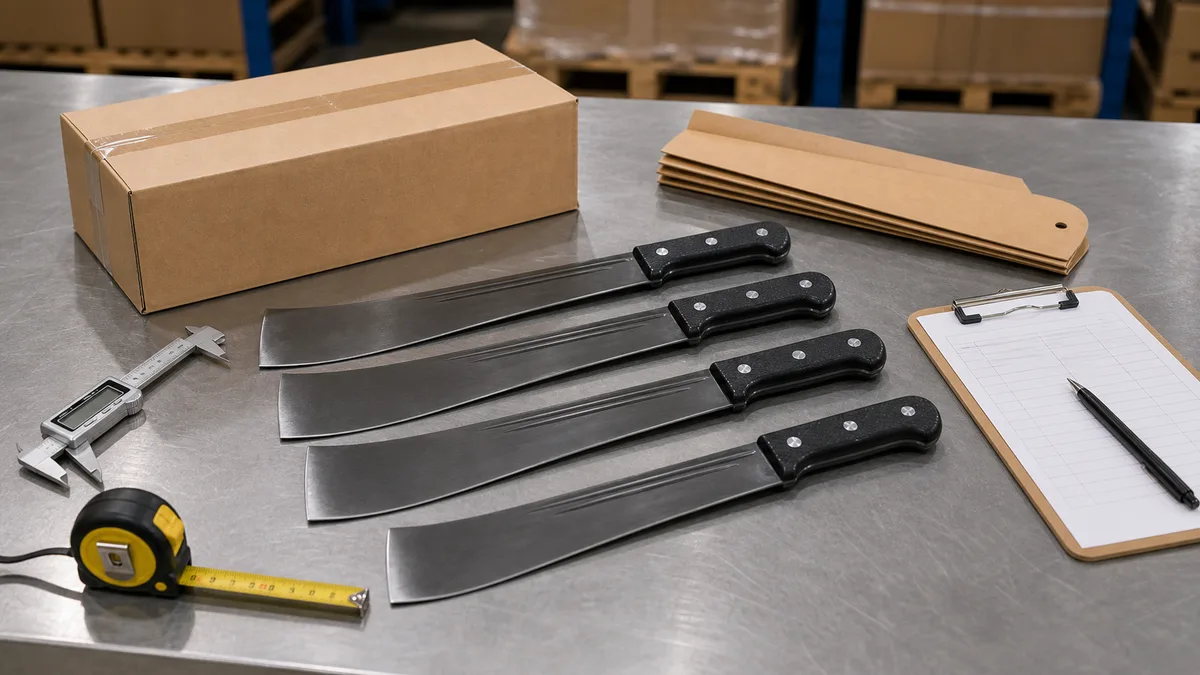
The earlier sickle and machete sample checklist is useful when buyers compare cutting tools before bulk order. For M120, the same approach should be applied to blade pattern, handle construction, sleeve packing, label direction, and carton marks.
How M120 fits a one-stop hardware order
Steel Machete M120 does not need to be treated as a one-product full-container purchase. It can be one line in a broader agricultural and hardware buying list, especially when the importer needs machetes, sickles, hoes, shovels, rakes, wire mesh, nails, and cutting accessories in one shipment. The key is to keep each SKU clearly separated by model, photo, quantity, packing, and inspection requirement.
The mixed container hardware tools service is useful when a buyer wants to combine several hardware systems into one practical shipment plan. Agricultural tools can be combined with garden tools, construction hardware, and cutting or abrasive items when carton strength, blade protection, gross weight, and loading sequence are planned correctly.
Best-fit buyer scenarios
Steel Machete M120 is suitable for farm supply importers, agricultural tool wholesalers, hardware distributors, market retailers, and mixed hand-tool container buyers. It is especially practical for buyers who need a recognizable machete item with clear blade shape, handle detail, and export packing control.
For a clear quotation, send the model name, required quantity, blade finish direction, handle material or color requirement, sleeve or carton packing preference, destination market, and whether M120 will ship alone or together with other hardware items. If a private label sleeve or warning label is needed, include artwork, label position, barcode direction, and carton mark details before sample confirmation.