
Farm-supply buyers rarely need every hoe head in the same weight. An established distributor may be replenishing a locally preferred pattern, while a new importer may need a smaller assortment to compare customer demand before expanding the range. Steel Hoe H305 is worth considering for this kind of structured purchase: the catalog lists several weight and size references, allowing the discussion to begin with identifiable choices rather than a single unspecified "steel hoe" quotation.
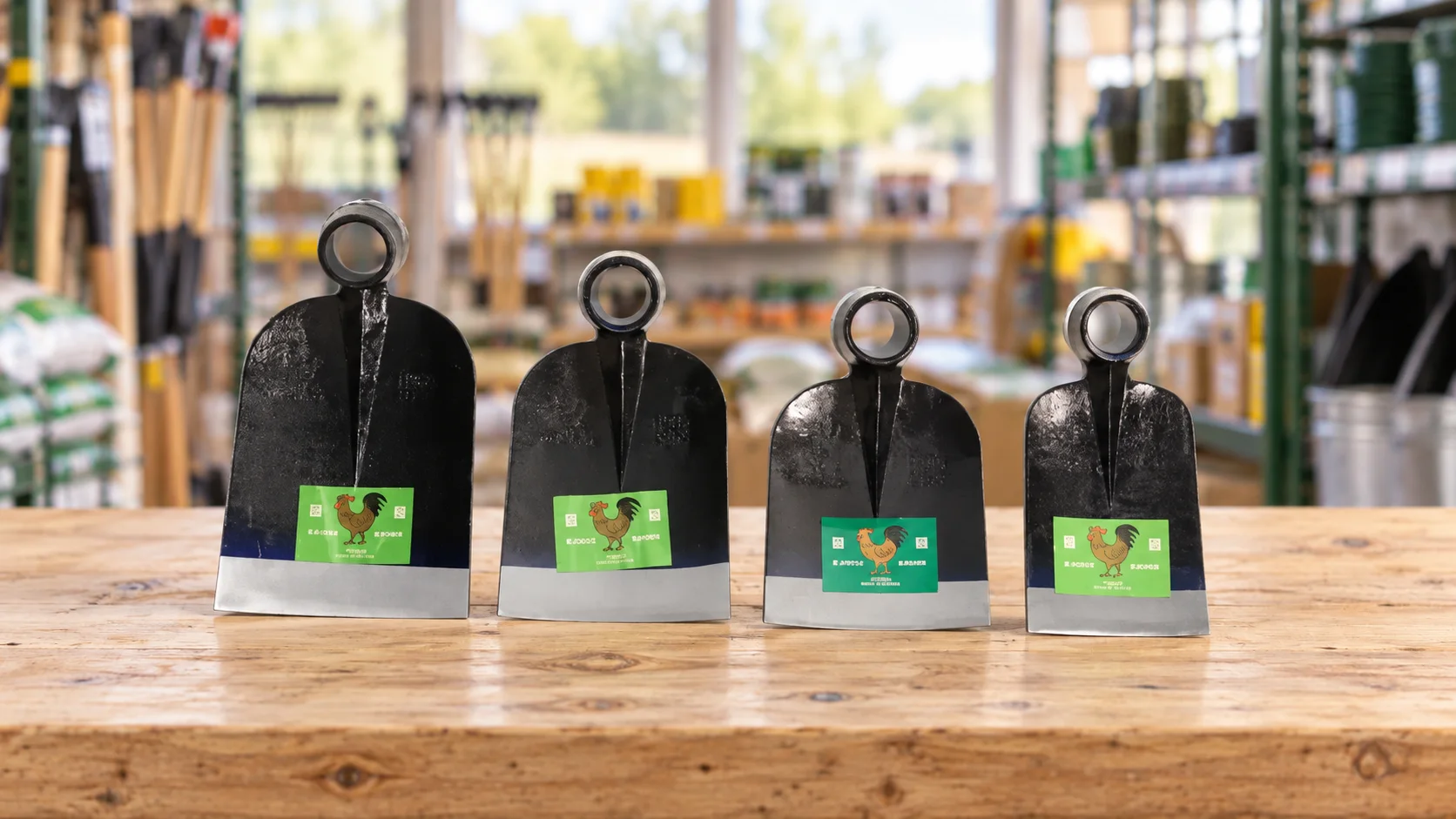
The H305 steel hoe head is supplied here as a head-only product reference. The photograph shows black faces, circular handle eyes, rounded shoulders and broad silver-colored lower edge bands. It does not establish a complete handled tool specification. This guide explains how to turn the available references into a clear assortment proposal without confusing nominal weights, blade dimensions or packing quantities.
The H305 references available for a quotation
The current product data lists the following choices. Treat them as catalog references to discuss, not as a completed order specification. In particular, the records list weights and dimensions separately: the pairing for each selected item must be confirmed before purchase.
- Model: H305.
- Product type: steel hoe head, with the handle arrangement to be agreed separately.
- Weight options: 2 lb, 2.5 lb and 3 lb.
- Size references: 210 x 155 mm, 220 x 160 mm and 272 x 178 mm.
- Carton references: a listed range from 33 x 30 x 17 cm to 40 x 31 x 18 cm, depending on the selected weight and packing arrangement.
Do not infer that the first weight automatically matches the first dimension. Ask for a line-by-line confirmation including the measurement directions, nominal head weight, acceptable tolerance and number of pieces per carton. The source photograph contains four heads; that visual group is not proof of four currently available weights, and its left-to-right positions should not be used to assign specifications.
Choose the assortment from local demand, not from the largest option
Start with the jobs and tool preferences reported by your dealers. Ask which head weights customers currently request, which blade widths they recognize, and whether buyers purchase replacement heads or complete tools. For a repeat program, a physical sample from the existing range is often more useful than a general description such as "heavy-duty farm hoe." It gives the supplier something concrete to compare with the H305 pattern.
A heavier head is not automatically the better-selling or more suitable choice. Tool handling also depends on the fitted handle, finished-tool balance and the user's work. Likewise, a wider blade does not by itself establish better performance in every soil condition. Shortlist the relevant configurations and evaluate assembled samples for the intended task before making performance claims in a retail listing.
For a first assortment, consider requesting quotations for the weights your dealers can actually evaluate, with separate quantities for each. A trial mix should be commercially agreed rather than advertised as a fixed low minimum. Keep your feedback organized by SKU so that a later reorder can increase a successful configuration without changing the whole product range.
Keep head weight separate from shipping weight
The 2 lb, 2.5 lb and 3 lb references describe the catalog weight choices for the head. They should not be copied into a freight calculation as if they were packed weights. Packaging, separators and any additional components contribute to shipment weight. Ask whether a quoted figure is nominal head weight, measured net weight or carton gross weight, and record the unit alongside the number.
If your warehouse works in kilograms, keep both the original catalog unit and the agreed purchasing unit in the item record. Avoid independently rounding values in the purchase order, label and receiving sheet. Agree the permitted tolerance and measurement method with the supplier so the same acceptance basis follows the product from sample approval to receiving inspection.
Approve the handle interface for each selected head
The reference shows a circular eye, but a photograph does not give its internal dimensions, taper or the correct handle profile. Where handles are sourced locally, send the intended handle sample or its controlled drawing. Ask for the relevant eye measurements and fit an actual sample before approving the combination. Do not assume that all H305 weights use the same eye dimensions or that a handle already used for a different hoe pattern will fit.
Review the assembled head position, secure seating, handle condition and finished-tool alignment using an agreed assembly procedure. Any required testing should have defined methods and acceptance criteria. A picture of a handle placed beside the head is not a substitute for a fitted sample, and improvised fitting should not become the basis of a commercial specification.
Build a receiving record that separates the variants
Create one order line for each approved weight-and-size combination. Include the H305 code, agreed dimensions, head weight, eye specification, finish, packaging quantity and a matching sample photograph. If different configurations share an outer shipping unit, the inner identification should still make them distinguishable without weighing every loose piece.
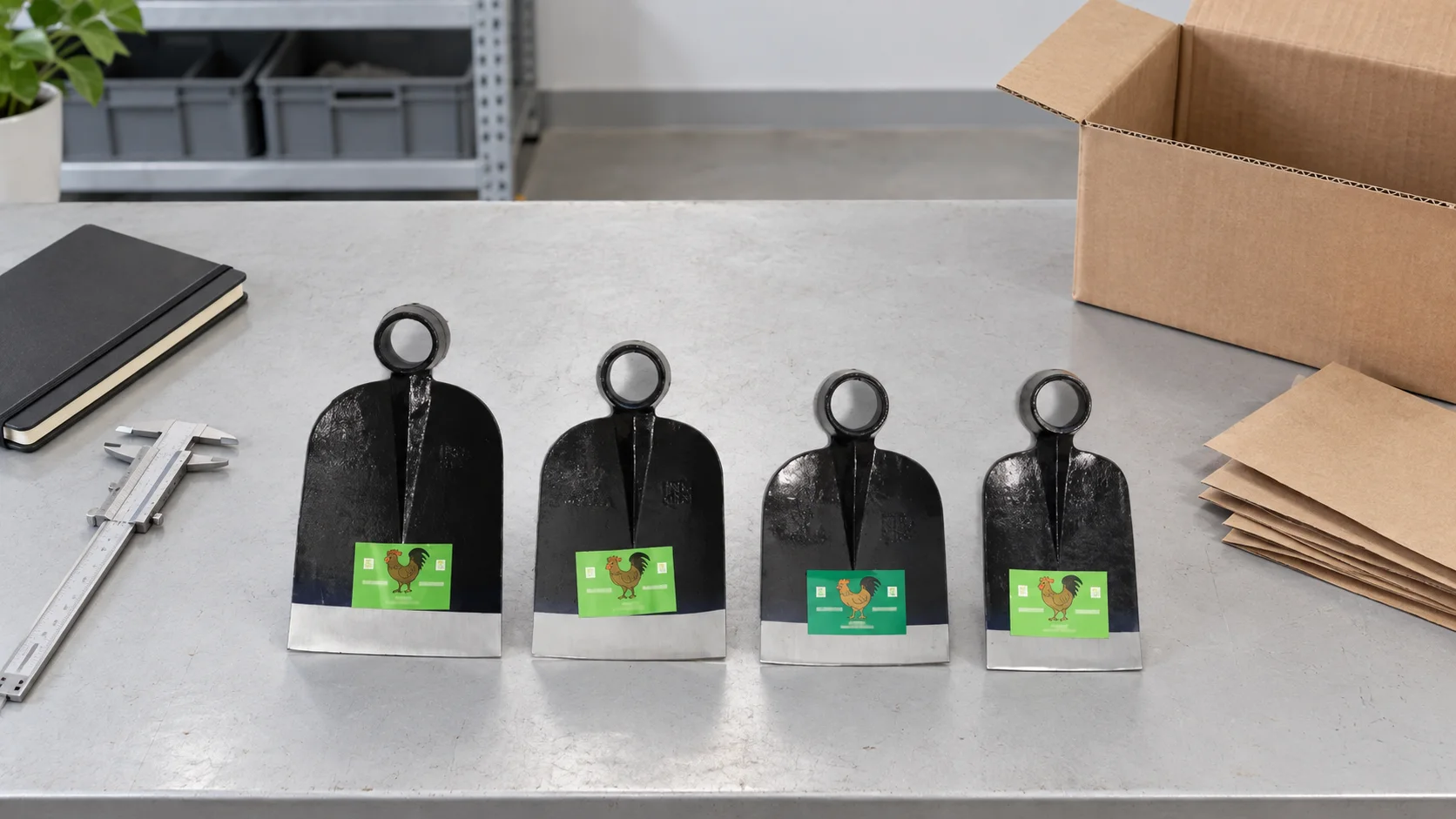
Useful receiving checks include matching the item code to the packing list, counting the agreed quantity, comparing the blade outline and eye with the approved sample, and checking for visible damage or unwanted surface defects. The silver edge band in the photograph does not prove a particular steel grade, hardness or heat treatment. Obtain documentary or test confirmation separately when these properties are part of the order requirements.
When considering adjacent patterns, the H304 hoe buying guide provides another product reference to discuss. H304 and H305 should remain separate item records: do not copy dimensions, weight options or handle-fit approvals between them. The broader hoe product collection can help shortlist patterns before samples are requested.
Use actual packing data to plan a mixed container
The H305 carton range is a starting reference, not a guaranteed number of heads per box or container. Confirm the final carton dimensions, gross weight, inner arrangement and pieces per carton for each selected variant. Protect exposed edges and separate surfaces where needed; packaging should also remain practical for dealers who split a bulk delivery into smaller sales quantities.
China Tools Supply can include selected H305 heads in a mixed hardware container plan alongside compatible agricultural tools, garden tools, construction hardware and cutting consumables. You do not need each product to fill its own container. Share the items you need, including those outside the current catalog, and sourcing availability can be checked as part of the wider list.
Compare the consolidated plan using both space and weight. Dense head-only tools, long-handled tools and other hardware have different packing characteristics; filling the remaining floor space is not the only consideration. Product availability, minimum quantities, protection, loading limits and destination charges all affect the result. Consolidation can be useful, but savings should be assessed for the actual order rather than promised in advance.
What to send for an H305 assortment proposal
Send your destination market, expected quantity by preferred weight, a reference photo or existing sample, and whether you need heads only or a handled-tool discussion. Add packing or labeling requirements already known. China Tools Supply can then clarify the available weight-and-size pairings, sample requirements and shipment mix with you. The aim is a repeatable farm-supply assortment in which every dealer and receiving team can identify exactly what was ordered.