
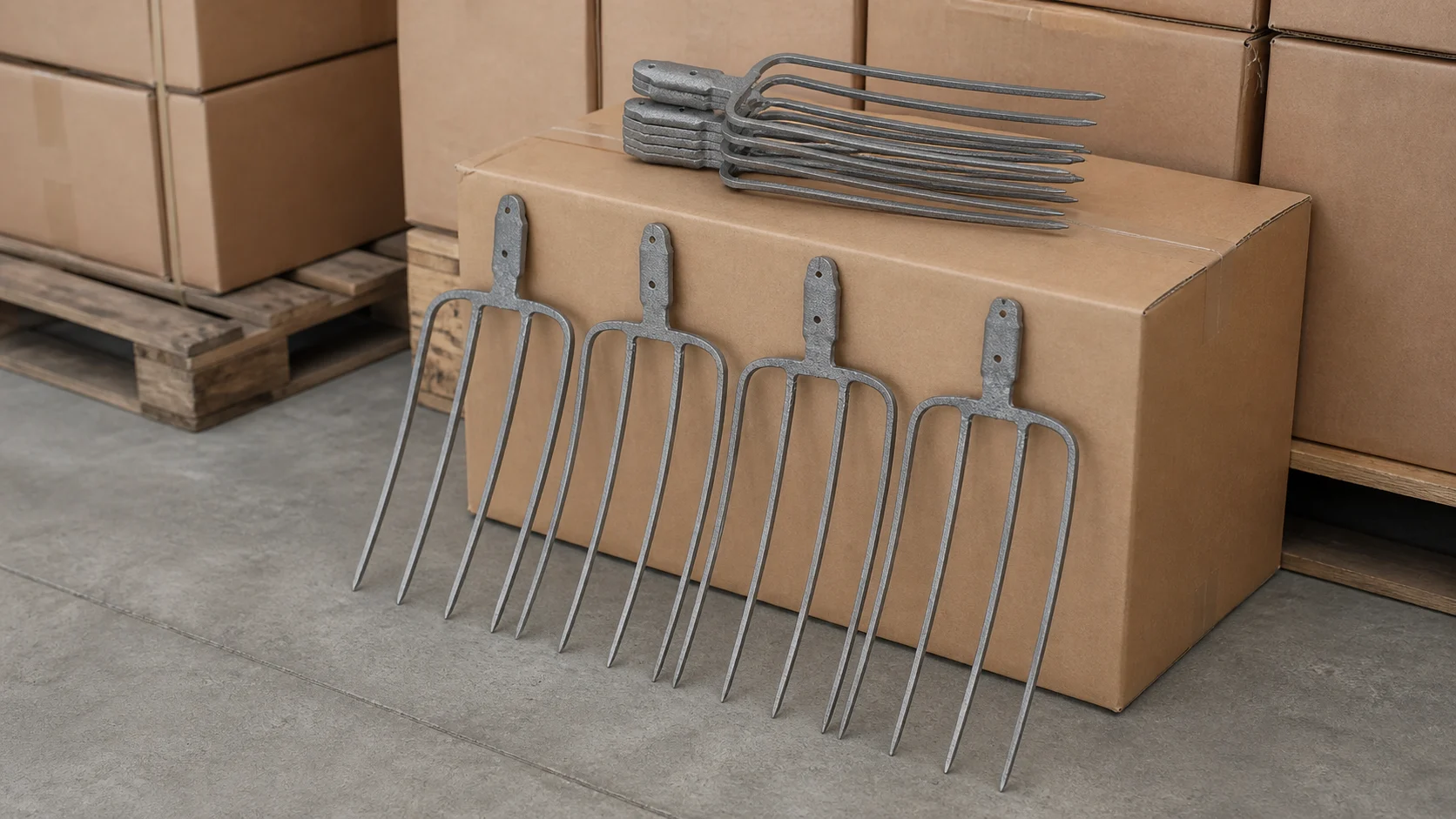
Fork Head F101-1 is a head-only agricultural tool component for buyers who arrange handle assembly locally or build a practical farm-tool range from separate heads and handles. The reference shows four straight narrow tines, two outer tines that curve around the central section, and a flat rounded tang with two fixing holes. This construction should be treated as a distinct product form. It is not a finished handled fork, and it is not a round-eye fork hoe head.
The Fork Head F101-1 page provides the starting reference for an inquiry. The product record positions it for farm tool assembly and agricultural wholesale. A buyer should use the image to identify the selected F101-1 tine pattern and twin-hole tang, then confirm the requested dimensions, handle plan, finish direction, quantity, bundle arrangement, carton requirement, and destination market. A generic request for “four-tine fork heads” can otherwise lead to the wrong handle connection or product profile.
Why the twin-hole tang changes the buying discussion
F101-1 uses a flat tang with two fixing holes rather than a round socket or eye. That feature matters because the buyer's intended handle must be designed or selected for the same connection method. Before approving a sample, confirm the tang shape, hole position, hole diameter, handle-end profile, and the buyer's planned fastening arrangement. If handles will be sourced locally, share a handle sample, drawing, or agreed reference so the two parts can be checked as one assembly plan.
Head-only procurement can give a buyer flexibility in handle material, local finishing, length, and final retail presentation. It also means that the buyer should not assume a handle fit from the product name alone. The finished assembly needs to be confirmed against the actual F101-1 tang. Keeping the fork-head and handle decisions on the same order record reduces the risk of receiving a correct head that cannot be fitted with the intended local handle.
Confirm the four-tine pattern before quotation
The reference product has four long, straight working tines. During product review, look at the number of tines, their spacing, alignment, overall outline, tip appearance, and the connection from the tines to the tang. These visible points help distinguish F101-1 from three-tine forks, curved fork hoe heads, rake heads, and other nearby agricultural components. The gray metal appearance in the reference image is a useful visual guide, but any required finish should be confirmed for the selected order instead of assumed from a photograph.
Do not infer unconfirmed steel grade, weight, hardness, or load capacity from the image. If a buyer has technical requirements, list them directly with the product reference. The practical approval file should identify the model, tine pattern, required dimensions, tang and hole reference, surface direction, packing requirement, and quantity. This lets the quotation address the specific F101-1 item rather than a broad product family.
Keep handle assembly separate from a round-eye fork hoe
F101-1 may sit beside other agricultural heads in a purchasing list, but its connection format needs separate treatment. The older Fork Hoe Head Series buying guide covers red-painted models with curved tines and a round handle eye. Those products are not interchangeable with F101-1. The intended handle, mounting method, working form, product photo, packing method, and quality check should remain on separate SKU lines.
For buyers assembling tools locally, the difference is especially important. A round-eye head typically relies on a different handle match from a flat two-hole tang. A purchasing team can avoid expensive assembly problems by sending the handle reference at the sampling stage and retaining the approved head-and-handle information for repeat orders. This is more reliable than selecting a product only by its tine count.
Sample approval should include the tang and the tines
A sample review should cover both the working end and the assembly end. Ask for front and back views of the head, a side view of the tines, a clear close view of the two tang holes, and the buyer's requested dimension checks. If the buyer will fit the head locally, assemble a sample with the intended handle before approving a bulk order. This checks the actual fastening plan and gives the buyer a realistic reference for the finished tool.
It is also useful to establish how the heads will be identified in a multi-item order. The product code, approved image, requested size, handle arrangement, finish direction, and packing note should remain together. This prevents a four-tine F101-1 head from being mixed with another fork pattern when the goods are unpacked, assembled, or distributed after arrival.
Protect the tines and tang during export packing
Fork heads are compact but shape-sensitive. Tines can rub against each other, bend under poor stacking, or mark adjacent heads if the packing plan is unclear. Paper separators, controlled stacking, bundle protection, carton dividers, and other agreed methods can help protect the product. The appropriate method depends on the selected dimensions, finish, bundle quantity, carton weight, shipping route, and destination handling requirements.
Carton data should be reviewed before the shipment plan is fixed. Ask for bundle quantity, units per carton, carton dimensions, gross weight, and agreed carton marks. Dense metal heads may create heavy cartons, while long tines need space that avoids pressure at the tips. Clear carton identification helps the receiving team separate F101-1 from other agricultural heads and from related long-handled tools.
Use QC photos to document the actual F101-1 item
Pre-shipment photos should allow the buyer to compare the shipment with the approved F101-1 reference. A useful set can include the full head, four-tine layout, twin-hole tang, requested measurement check, bundle arrangement, protective layers, carton packing, and carton marks. When several fork models are in one order, organize images by SKU rather than sending a mixed collection of warehouse photos.
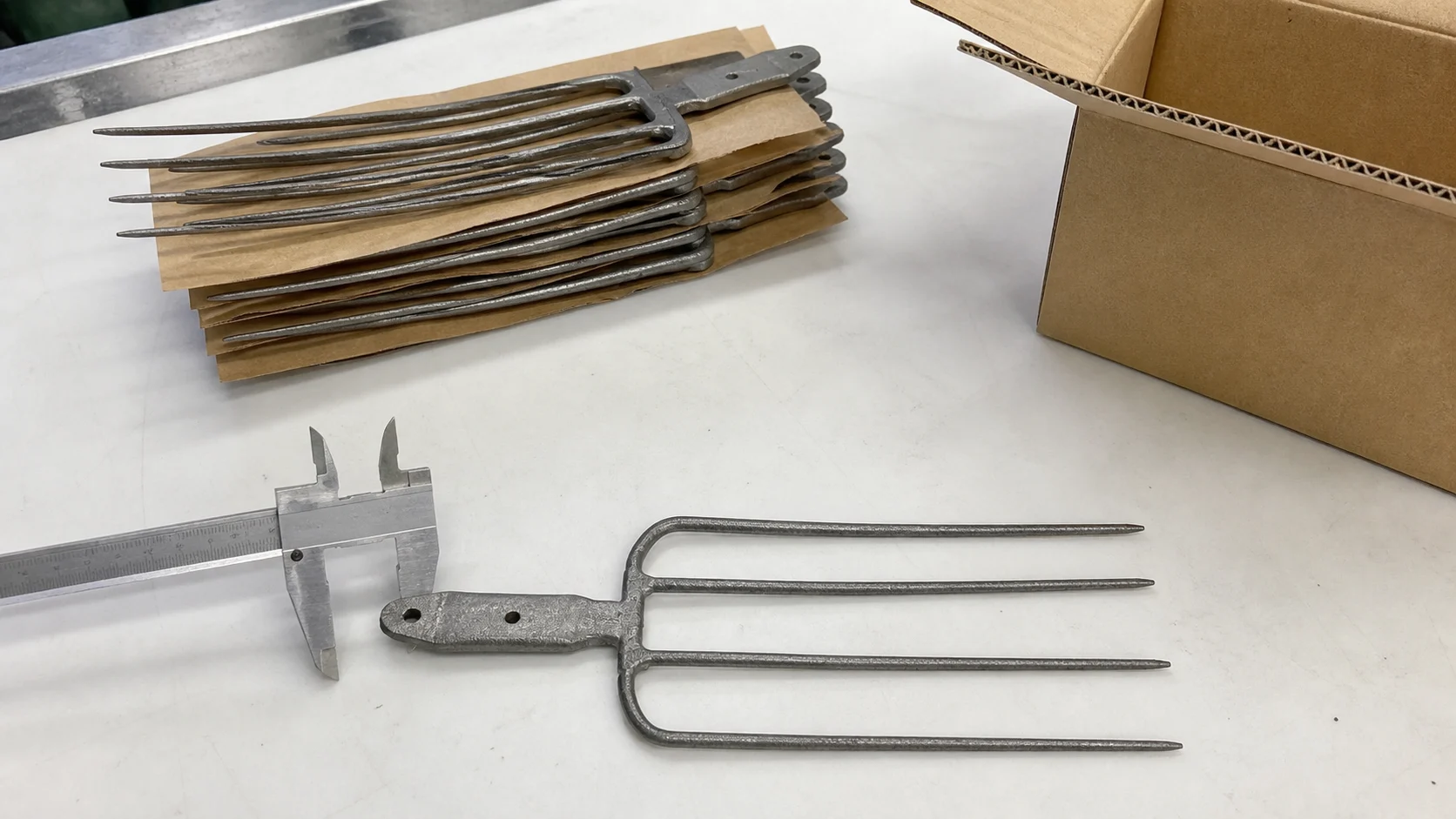
The most useful QC questions are simple: does the head show the correct four-tine pattern, does the tang match the approved twin-hole reference, are the tines aligned with the selected form, and does the packing protect the tines and tang? A focused photo list makes those checks easier for the buyer, packing team, and receiving warehouse to follow.
Compare fork products in the right product family
The Forks & Rakes category provides a useful overview for buyers sourcing related agricultural and garden components. It should be used to compare models, not to combine them into one loose specification. A fork head, a rake head, and a fork hoe may all have tines, but they can differ in connection method, pattern, intended handle, finish, packing, and sales channel.
When buyers compare multiple fork patterns, record each product's model, reference image, tine count, tang or socket form, handle plan, packing, quantity, and sample status on separate lines. That small amount of structure gives a clearer quotation and supports later reorders, especially when the buyer manages local handle assembly or distributes tools through several agricultural wholesale channels.
Include F101-1 in a wider agricultural tool order
F101-1 can be combined with compatible agricultural heads, garden tools, construction hardware, or related products when each item has its own packing information. The mixed-container hardware service helps buyers coordinate several product lines in one practical purchase program. Each SKU remains separately specified, while carton dimensions, protection needs, and loading sequence can be reviewed across the total order.
For a Fork Head F101-1 quotation, send the selected product reference, required tine and tang dimensions, intended handle arrangement, target quantity, finish direction, packing preference, carton marks, destination market, and any additional items planned for the same order. With those details, China Tools Supply can organize a focused sample discussion, packing review, QC photo list, and export plan based on the buyer's actual requirements.