
Fork hoe heads are practical agricultural tool components for importers who serve farm supply channels, local handle assembly programs, garden tool distributors, and mixed hardware buyers. They look simple in a catalog, but the quotation should not be based on product name alone. Tine count, head weight, eye shape, handle fit, paint finish, tip condition, bundle quantity, and carton data all affect how the item is purchased and shipped.
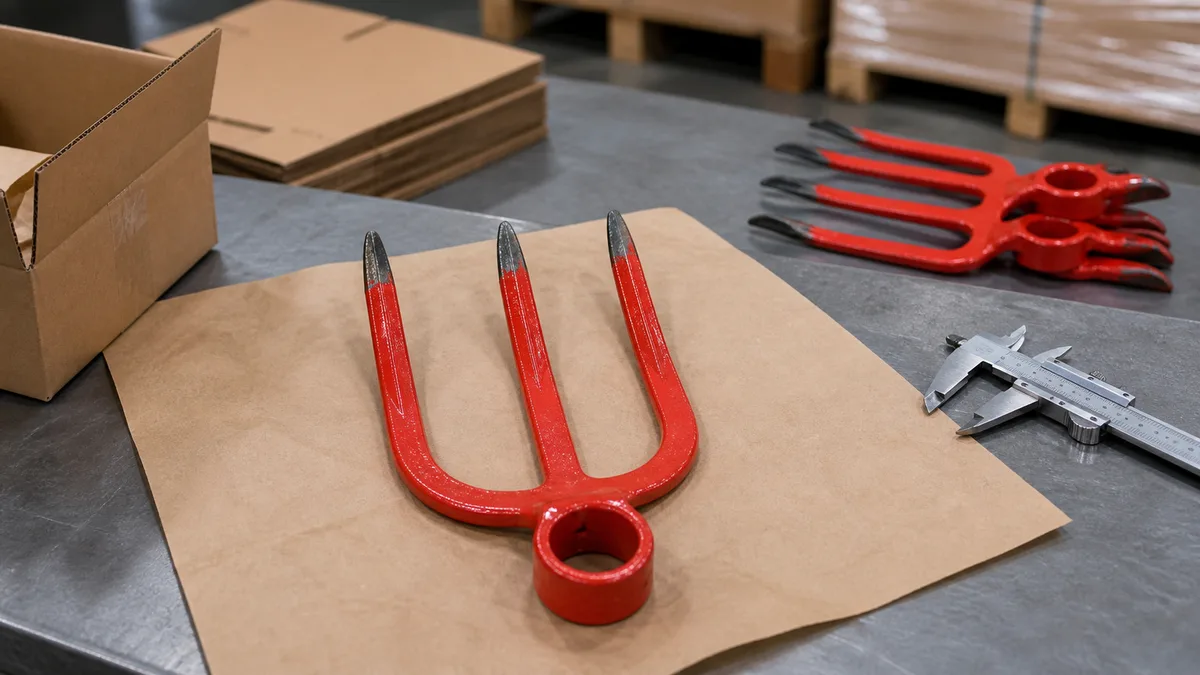
This article focuses on the Fork Hoe Head Series. The product range covers steel fork hoe head models for buyers who need 3-tine, 4-tine, and compact fork hoe options for handle assembly or bulk hardware supply. The reference product image shows a red painted steel fork hoe head with curved tines, dark working tips, and a round handle eye, so the article treats it as a head-only item rather than a finished long-handled tool.
Why fork hoe heads are useful for importers
Many agricultural tool buyers prefer head-only items because handles can be sourced or assembled locally. This can reduce carton length, improve loading flexibility, and allow the buyer to match local handle material, length, and grip preference. For markets where farm tools are sold through wholesalers or rural hardware shops, fork hoe heads can also sit beside hoe heads, shovel blades, fork heads, rakes, sickles, and machetes in a broader agricultural tool program.
When comparing nearby categories such as Forks & Rakes, the buyer should separate fork hoe heads from garden rakes and straight fork heads. A fork hoe head is normally selected by tine pattern, working angle, eye or socket design, head weight, and handle compatibility. A rake is selected more by head width, tine spacing, and garden maintenance use. Keeping these product lines separate makes quotations easier to read and reduces sample approval mistakes.
Model selection: tine count, weight, and eye shape
The first specification point is tine count. A 3-tine head can fit buyers who want a compact agricultural tool head for cultivating, loosening, or rough soil work. A 4-tine model may be preferred when the buyer wants a wider working area or a different local pattern. Because the product page groups several models in one series, the inquiry should state the exact model reference, tine count, target weight, and expected handle arrangement.
The handle eye is just as important as the tines. Buyers should confirm the eye diameter, eye shape, wall thickness around the socket, and whether the local handle supplier can match it. If the handle will be assembled after import, the buyer should send the intended handle diameter and material. If handles may be added in a later order, keep the fork hoe head quotation and handle quotation clearly separated.
Paint finish and working tip confirmation
The reference product uses red paint with dark tips. Buyers should confirm whether the red finish follows the catalog sample, a buyer color reference, or a private label color system. Paint coverage, runs, chips, and uneven finish are visible issues on agricultural tool heads, especially when products are stacked in bulk cartons. For retail or distributor channels, request photos of the front side, back side, side edge, eye area, and tine tips before shipment.
The working tips should be checked for shape and consistency. They do not need to be presented like fine cutting blades, but the tips should match the agreed pattern and should not show serious deformation. If the buyer needs a specific tip finish or local user preference, that requirement should be included before sample approval.
Sample approval and packing photo checklist
For a head-only fork hoe order, a practical sample approval file should include the full product photo, tine count, head weight, eye measurement, paint color reference, tip close-up, bundle photo, carton photo, and carton mark. This is especially useful when several agricultural tool heads are quoted together and may look similar in a spreadsheet.
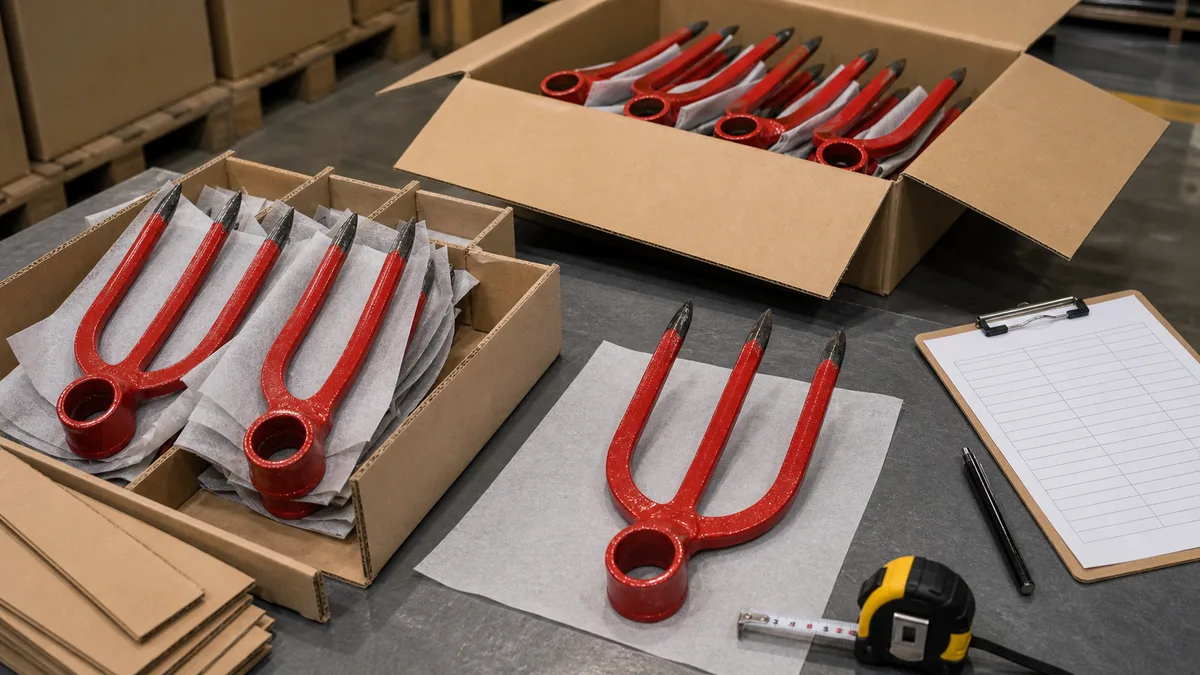
Fork hoe heads are heavy and shape-sensitive. Tines can rub against each other during transport if the packing is too loose, while heavy cartons can become difficult to handle if the quantity per carton is too high. Ask for bundle quantity, carton quantity, gross weight, carton size, and a packing photo before confirming a bulk order. If paper, film, or dividers are required to protect the painted finish, confirm that before production follow-up.
How to plan fork hoe heads in a mixed tool order
Fork hoe heads are often purchased with hoe heads, shovel blades, handled shovels, rakes, sickles, machetes, and other agricultural tools. The challenge is not only item selection. It is also carton weight, product shape, packing protection, and loading sequence. Heavy head-only items should not be mixed carelessly with lighter retail-packed tools or long-handled goods.
The broader mixed container hardware tools planning guide explains why each SKU should have its own model photo, carton data, and loading notes. For fork hoe heads, this is especially important because different tine patterns and head weights may share similar names. A clean item list helps the buyer, the supplier, and the inspection team check the right product before shipment.
Relation to hoe and shovel buying programs
Fork hoe heads can complement a wider hoe and shovel buying plan, but they should not be merged into one generic “hoes” line. The shovel and hoe wholesale selection guide is useful for understanding how importers compare handled tools, head-only tools, blade shape, carton length, and sample photos. A fork hoe head needs its own confirmation because the tine pattern, socket style, and packing risk are different from standard hoe heads.
For best results, the buyer should send the model reference, tine count, target weight or size, paint color, handle assembly plan, packing preference, target quantity, and destination market. China Tools Supply can then organize the product reference, quotation scope, sample photos, carton data, and mixed agricultural tool order follow-up around the correct item.
Best-fit buyer scenarios
The Fork Hoe Head Series fits agricultural distributors, local handle assembly buyers, farm supply wholesalers, and importers building a practical garden or farm tool range. It is also suitable for buyers who want to test head-only agricultural tools before adding handled tools or a broader mixed container program.
A good inquiry does not need to be complicated, but it should be specific. Send the fork hoe head photo or model name, expected tine count, quantity, packing style, and market requirement. If the order is connected with other agricultural tools, include those item names in the same buying list so the quotation and packing plan can be prepared together.