
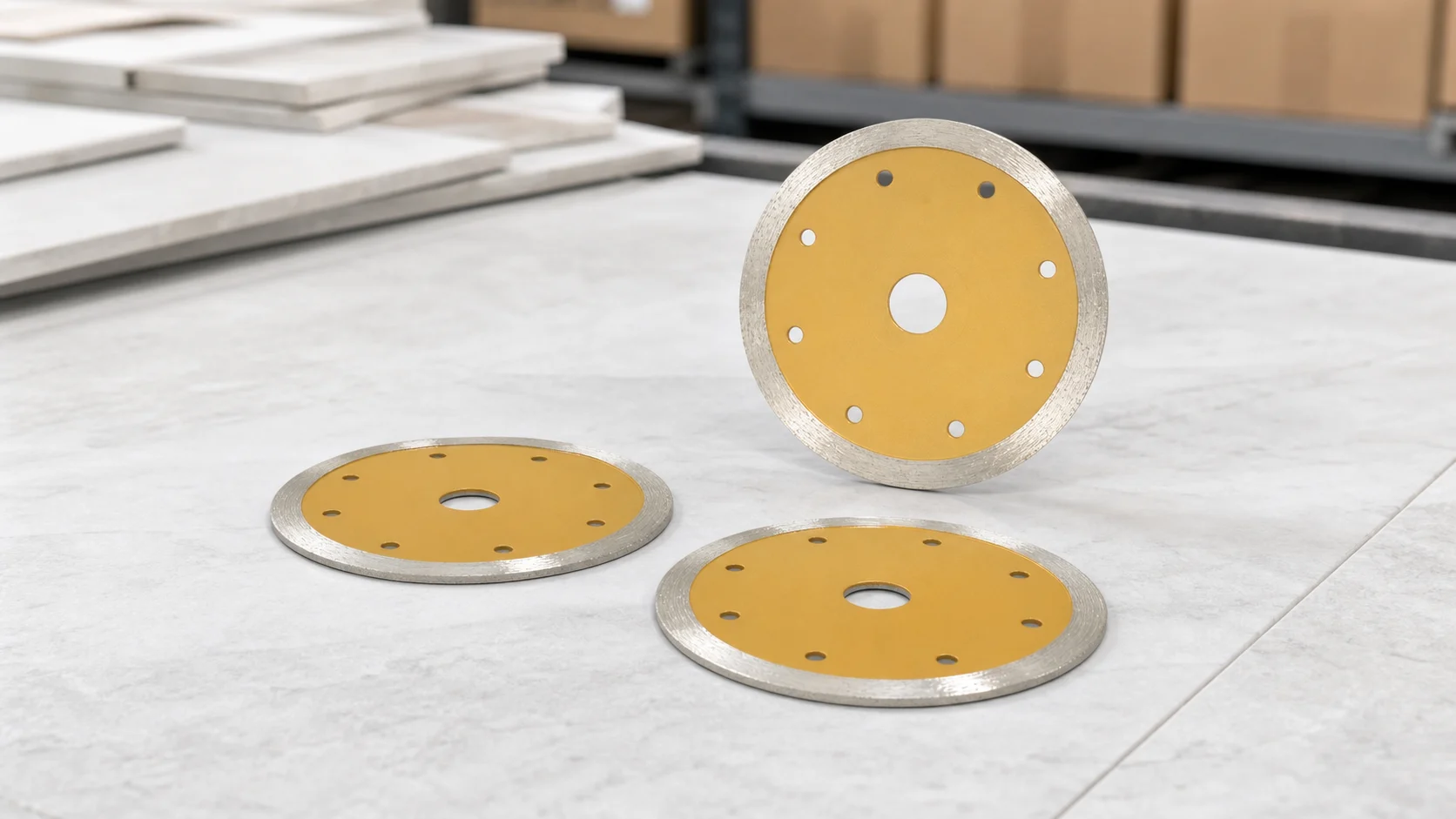
A continuous rim tile cutting blade is a specific consumable for buyers building a tile, ceramic, and construction-accessory range. It should not be quoted as a generic diamond blade. The cutting edge is a continuous diamond rim on a steel core, rather than a segmented or turbo-style rim. That product construction affects how the blade is positioned in a range, what the buyer should compare, and the reference details that need approval before purchase.
This guide focuses on the Continuous Rim Tile Cutting Blade listed by China Tools Supply. The product record describes a steel core with a continuous diamond rim, with diameter arranged by market request, for tile, ceramic, and DIY hardware channels. The reference image shows a flat colored steel core with a narrow unbroken rim and a central arbor opening. A buyer should use that physical profile as a starting point, then confirm the selected size, bore, rim specification, package format, and intended material before approving an order.
Why the continuous rim needs its own SKU
Diamond blades are often sold together in a hardware catalog, but their rim designs should not be treated as interchangeable. A continuous rim blade is usually considered when the buyer's end users are cutting tile or ceramic materials and the desired product position emphasizes a controlled, neat cutting finish. Actual cutting results depend on the material, blade specification, equipment condition, operating method, and cooling or dust-control practice, so the commercial claim should remain aligned with the selected product and its intended use.
For range planning, the Diamond Blades category allows buyers to review continuous rim, segmented, turbo, and masonry-oriented options together. That comparison should happen before the purchase order is finalized. Once the range is selected, each blade type needs a separate item line because diameter, bore, rim design, application, unit packing, and sales channel can differ even when the outer size appears similar.
Start with the materials and buyer channel
A useful inquiry begins with the materials the buyer expects to address. State whether the range is being prepared for ceramic tile, porcelain-style tile, general tile installation, DIY outlets, professional building-material distributors, or another defined channel. The right commercial discussion is not simply “a blade for tiles.” It should identify the product range, the target user, the expected price level, and the type of equipment the buyer expects its customers to use.
It is also important not to promise one cutting result across every material. Tile composition, thickness, glaze, equipment speed, operator technique, and job conditions vary. A sample or agreed reference should be used to discuss the selected blade against the buyer's material and market expectation. This is more useful than making broad performance claims that are not tied to a defined test material or operating condition.
Diameter and arbor confirmation
Diameter is the first commercial measurement to list, but it is not the only one. The buyer should also confirm the arbor or bore requirement, the equipment type, any permitted adapter arrangement, and the requested quantity for each separate size. If more than one diameter is required, put each one on its own SKU line with its own packing requirement. This prevents a quotation from being correct for one blade size while leaving the other sizes unclear.
For a clear approval record, request front and back reference photos, a diameter check, a bore or arbor check, and a close view of the continuous rim. Where the selected product has core holes or slots, the photo set should show the agreed face design instead of relying only on an old catalog picture. Buyers should also confirm whether any printing, color, artwork, or market-specific marking is required before production planning begins.
Separate continuous rim from segmented and turbo styles
The main sourcing decision is to match the rim design to the intended range. A continuous rim blade should be kept as a separate product line from a segmented blade or a turbo-style disc. Mixing their specifications under one description can cause errors in packaging, artwork, pricing, and buyer expectations. The reference photo, product title, item code, diameter, bore, rim style, and unit pack should all point to the same item.
The Segmented Diamond Saw Blade buying guide is a useful comparison when the buyer is building a wider construction-consumable assortment. It explains a different blade profile and selection process. A buyer may carry both lines, but the continuous rim blade should be specified for its own tile and ceramic position rather than being described as a variation of the segmented model.
Sample review should include the package
A sample is not only for checking the physical blade. It should also confirm how the product will be presented and protected. For a retail program, the buyer may need a blister card, color sleeve, color box, barcode, hanging-hole format, warnings, or artwork placement. For bulk supply, the priorities may be unit separators, carton quantity, carton strength, gross weight, and easy warehouse identification. The selected packaging needs to match the channel that will receive the blades.
Share the blade size, intended user, country or market, desired unit pack, carton mark request, barcode requirement, and any artwork files at the beginning of the discussion. This lets the quotation address the physical item and the presentation requirement together. Packaging should not be left until after the product and price are approved, especially when the buyer plans to resell the blade in a defined retail format.
QC photos for rim, bore, and packing
Pre-shipment photos should show the selected model in a way that a buyer can compare with the approved reference. A useful set can include the blade face, continuous rim close-up, bore or arbor measurement, diameter check, visible core details, unit packaging, carton arrangement, and final pallet or loading preparation where relevant. If the order includes several diameters or packages, group the photos by SKU so that the receiving team can identify what was checked.
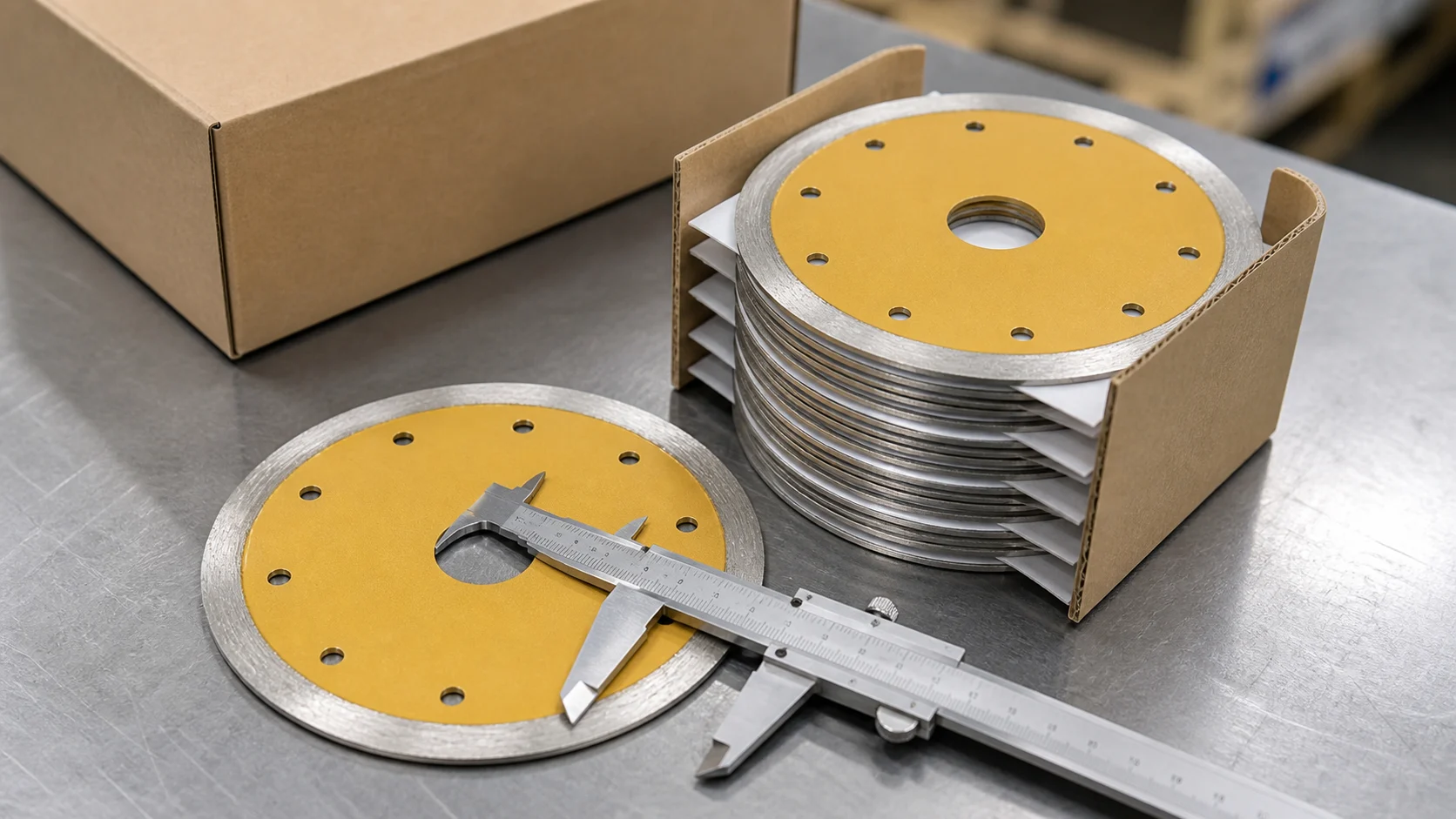
The continuous rim should be protected from rubbing against adjacent blades during transit. Paper interleaves, individual sleeves or agreed unit packs, cardboard edge protection, carton dividers, and reasonable stack weight can help protect the presentation of the product. The exact method should be selected according to blade diameter, package style, carton quantity, shipping route, and destination handling requirements.
Include tile blades in a wider hardware program
A tile cutting blade range can sit beside hand tools, tile-installation accessories, construction hardware, or other building-material items. When several categories are planned together, the buyer should share the blade carton dimensions and packing style along with the other product lines. This helps avoid placing display packs or blade cartons beneath heavier items without considering the actual loading sequence.
The private label and packing service is relevant when a buyer needs a defined product presentation, artwork, barcode, or carton mark for the continuous rim blade. Share the selected product reference and packaging requirement with the wider buying list so the commercial, packing, and shipment discussion can be kept consistent.
Information to prepare for quotation
- Tile, ceramic, or other intended application, plus the target user and sales channel.
- Required blade diameter, arbor or bore, equipment context, and quantity for each separate SKU.
- Continuous rim profile, core appearance, color, marking, or artwork requirement where applicable.
- Sample reference or material information needed for the buyer's own evaluation.
- Unit packing, barcode, retail card or box, carton mark, carton quantity, and destination market.
- Other tile accessories, building hardware, or tool items planned for the same purchasing program.
Continuous Rim Tile Cutting Blades are best purchased with a clear application, size, arbor, package, and approval plan. When the buyer shares those details with the intended product range and wider hardware list, China Tools Supply can organize a practical quotation scope, sample discussion, QC photo list, and export packing plan.