
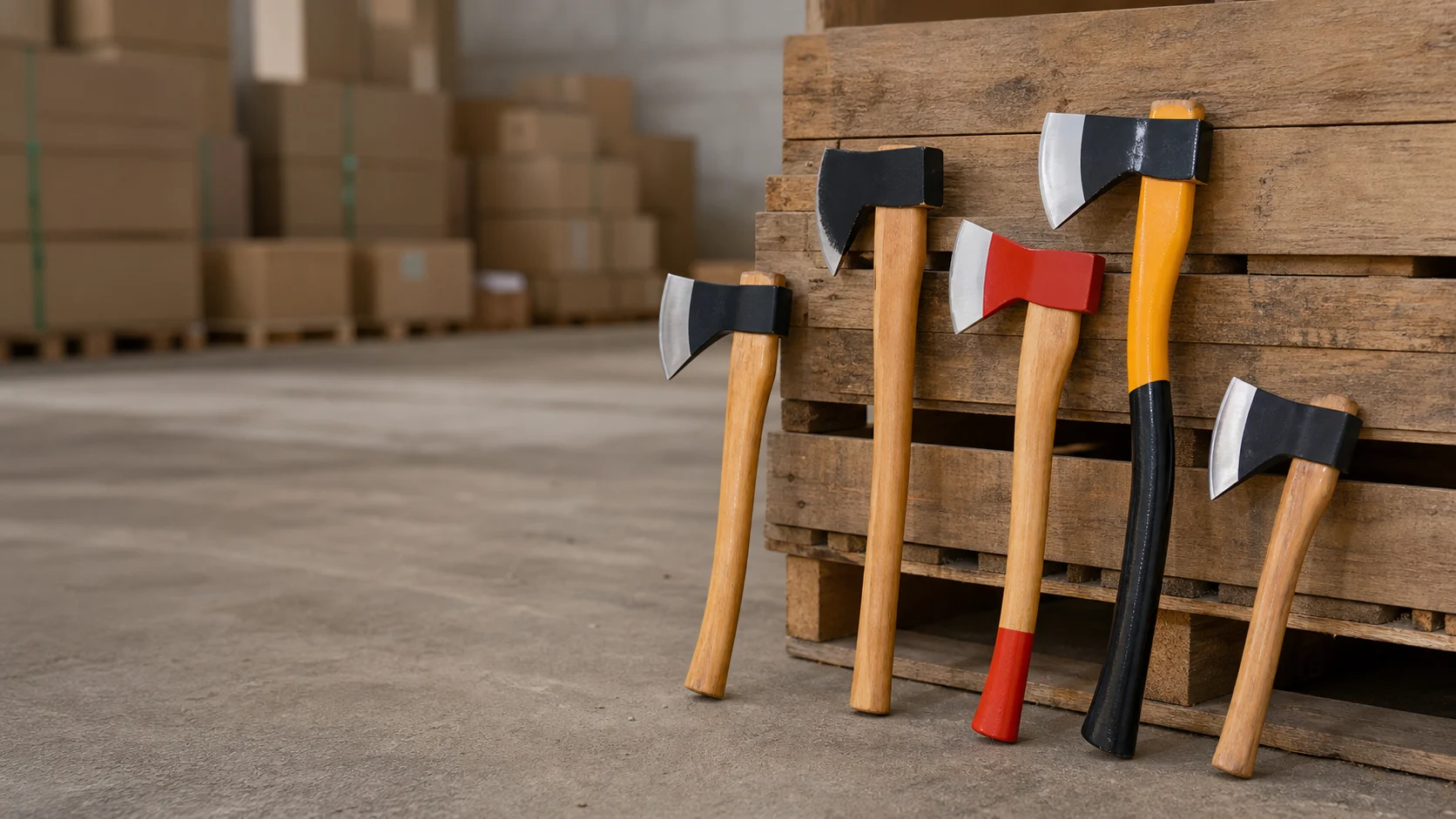
A finished wood-handle axe is a straightforward product for a hardware range, but it should not be quoted as a generic "axe." Buyers need to identify the head pattern, weight option, handle material and length, painted finish, polished cutting edge, edge protection, packing method, and target sales channel. Those details affect the approved sample, carton weight, retail presentation, and the consistency of a repeat order.
This guide focuses on the Wood Handle Axe Series. The catalog reference groups finished A601W and A603W axes with steel heads, natural wood handles, painted head finishes, and polished cutting edges. It is relevant for hardware wholesalers, farm supply distributors, outdoor tool buyers, and retail programs that want a handled axe product rather than a head-only component.
Why finished wood-handle axes need separate product references
Axe heads and finished axes may sit in the same tool program, but they are not interchangeable for buying or packing. Head-only products are often considered by buyers who assemble handles locally. A finished axe needs the head and handle to be approved together. The buyer should therefore keep the full product photo, selected weight, handle finish, edge protection, label requirement, and carton details in one product file.
The wider Axes & Hammers range includes related striking and cutting tools, but the finished wood-handle series should remain a distinct quotation line. This makes it easier to compare handled axes with axe heads, sledge hammer heads, and other products without mixing their specifications or carton calculations.
Start with the model and weight selection
The reference series includes A601W and A603W model families. The catalog presents multiple pound-based selections for each family and also shows A603W references from 500 g to 2000 g. These references are useful for building a buying list, but the exact weight option, accepted tolerance, head shape, and quantity per option must be confirmed for the final quotation. Do not combine several weights under one unqualified SKU name.
A practical buying list gives each variation its own line: model, selected weight, handle length if required, head color or finish, quantity, and packing request. This avoids a common problem where the buyer approves one axe photo but receives a quotation or carton mark that does not clearly identify the selected weight. For repeat orders, retain the approved model photo and the final carton reference with the purchase record.
Wood handle and head-to-handle fit
For a finished axe, the handle is part of the product identity. The buyer should check the wood grain appearance, handle profile, surface finish, end treatment, and whether a painted handle-end accent is required for the selected market. Natural wood handles can vary in color and grain; what matters is that the finished appearance follows the approved sample and that the handle is sound, smooth, and securely fitted to the head.
The head-to-handle connection needs its own sample check. Request full-product photos and close views of the eye area, head seating, and handle top. If the buyer has a local safety or warning-label requirement, share it before bulk packing is arranged. It is better to settle the finished-tool reference at sample stage than to treat handle fit as a packing-stage issue.
Painted head finish and polished cutting edge
The catalog reference shows painted axe heads with polished cutting edges and several presentation colors. The selected color is not just a visual preference: it should be written into the sample approval record so paint coverage, polished edge appearance, scratches, and chip resistance can be reviewed against the same reference. Buyers using one color across a retail range should also confirm the related label or sleeve design before production.
The cutting edge needs protection during packing and loading. The requested protection can be a paper sleeve, cardboard guard, or another agreed method suitable for the product and target channel. The objective is practical: protect the polished edge, reduce accidental contact during packing, and keep finished axes from damaging nearby handles or cartons.
QC photos and export packing checks
A useful pre-shipment photo set covers more than one front view. Ask for the selected weight group, full handles, axe-head finish, polished cutting edge, head-to-handle fit, protective edge material, unit arrangement, carton quantity, carton mark, gross carton weight, and final carton stack. If the order contains more than one model or weight, photos should identify each variation clearly.
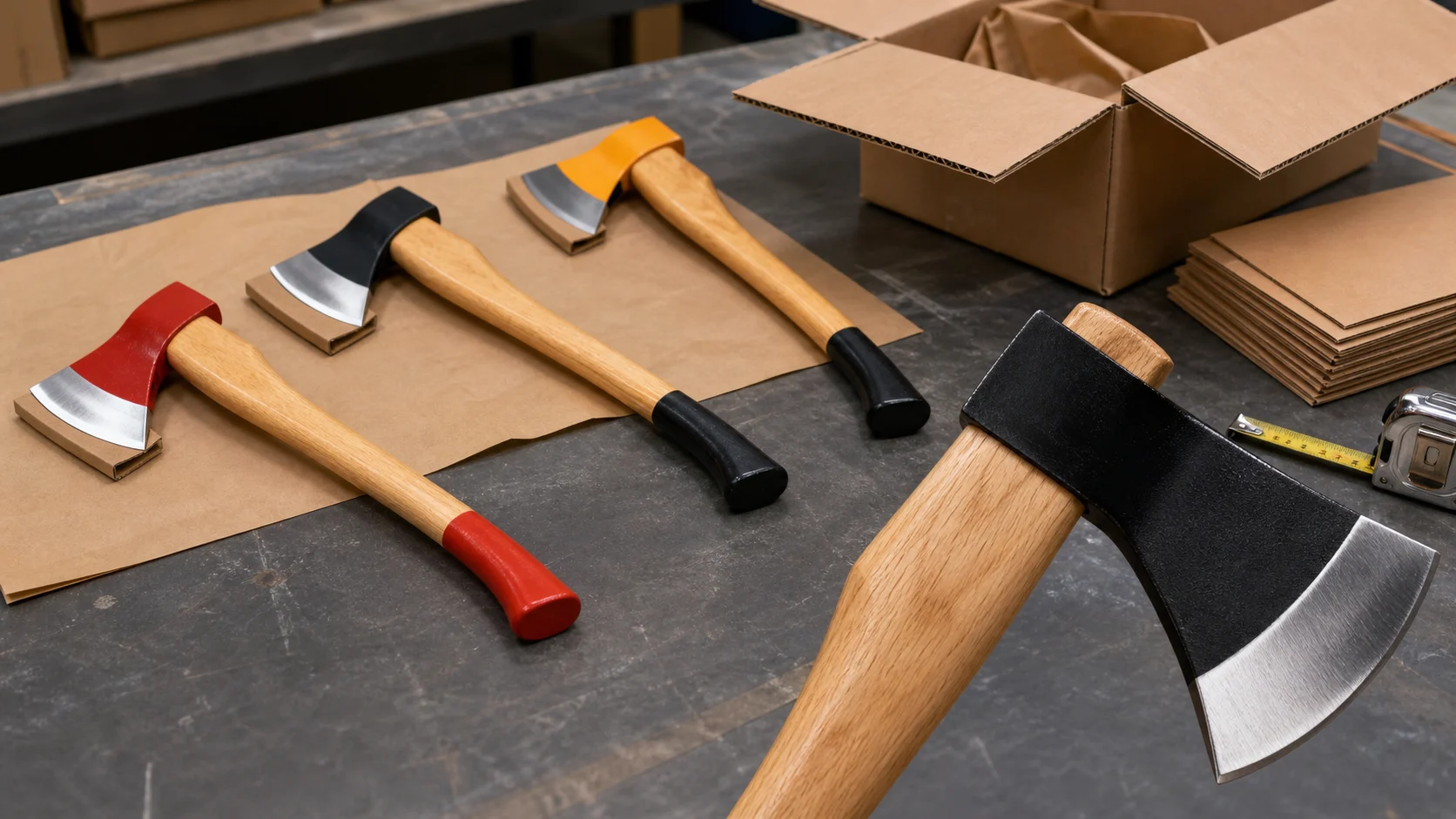
Carton planning is particularly important for axes because heads add concentrated weight while handles increase carton length. Confirm pieces per carton, gross weight, carton dimensions, edge protection, and whether palletization is needed. A carton that is acceptable for a small axe may not suit a heavier model or a mixed selection of several weights.
How wood handles compare with fiberglass options
Wood and fiberglass handles serve different buyer preferences. A wood-handle series has a traditional, natural presentation that can fit farm supply, outdoor, and general hardware ranges. Fiberglass handle products may be selected when a buyer wants a different grip or color presentation. The right decision depends on the local market, intended use, and retail positioning; it should be made from an approved product sample rather than a generic product name.
For a comparison point, see the Fiberglass Handle Splitting Axe buying guide. The products are not the same, but both require buyers to confirm head weight, handle construction, finish, labels, edge protection, and carton strength before shipment.
Including handled axes in a mixed hardware order
Handled axes do not need to fill a separate container. They can be included with compatible axes and hammers, pickaxes, shovel products, nails, wire mesh, and other hardware lines when the buying list and carton data are organized early. The main consideration is to combine carton shapes and weights sensibly, especially when heavy metal-headed tools are loaded with lighter or longer products.
The mixed container hardware tools service can help buyers put several required product lines into one practical shipment. Share the selected axe models, quantities, packing needs, carton information, and other product lines together so the quotation and loading discussion reflect the actual order plan.
Information to send for quotation
- Selected A601W or A603W model reference and required weight option.
- Target market and whether the item is for wholesale, farm supply, retail, or outdoor tool sales.
- Wood handle finish, length expectation, painted color or finish preference, and label needs.
- Edge protection, unit packing, carton mark, carton quantity, and pallet requirement.
- Order quantity per weight or model, plus any other hardware items for the same shipment.
Wood Handle Axe Series is best suited to importers and distributors that need a practical finished axe line with clear model, weight, packing, and QC confirmation. A complete buying list gives China Tools Supply the information needed to check the product reference, prepare a meaningful quotation, organize sample review, and plan the order with related hardware products.