
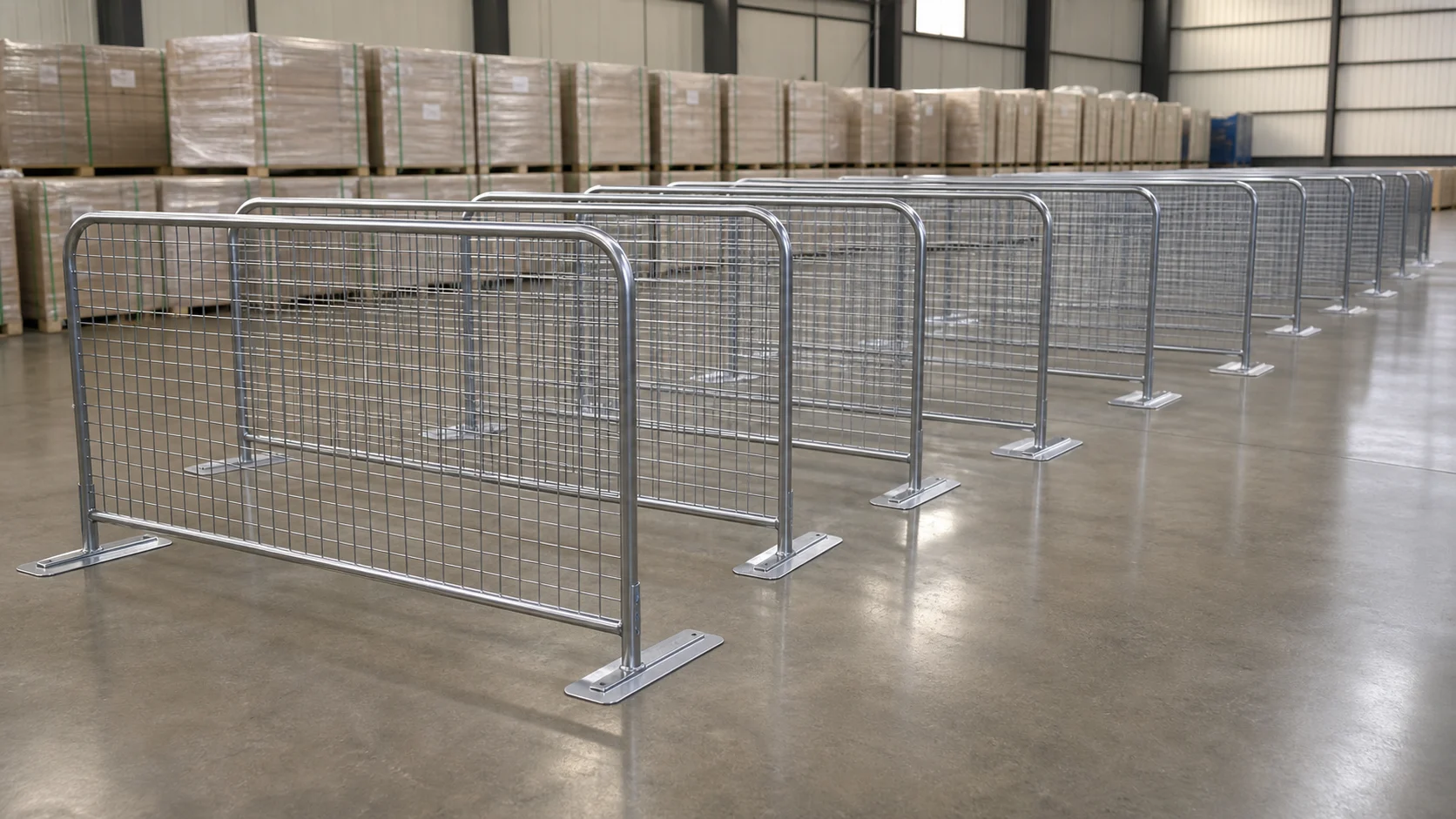
Welded wire mesh panels are usually sourced as a finished panel format rather than as a loose wire product. They can be used for temporary separation, fencing programs, garden and farm supply, or construction-related purchasing. For importers, the important point is that a panel inquiry has more variables than a simple mesh description. The panel dimensions, mesh opening, wire detail, frame construction, base arrangement, finish, packing method, and destination use should be discussed together.
This guide covers the Welded Wire Mesh Panel listed by China Tools Supply. The product record describes galvanized or coated steel wire, with opening and panel size arranged by request. The reference configuration is a rigid rectangular welded mesh panel with a rounded tubular perimeter frame and separate flat feet. That configuration is useful for many temporary barrier programs, but buyers should confirm the exact frame, feet, dimensions, and finish needed for their selected order instead of relying on a product name alone.
Panel format and roll format solve different needs
A mesh panel is not a substitute for a wire mesh roll. A panel has a fixed form that is easier to position, stack, count, and receive as an individual unit, while a roll is generally selected when a buyer wants flexible coverage that will be unrolled and fixed on site. Buyers sometimes place both formats on the same hardware buying list, but they should be quoted as separate products because their wire arrangement, frame requirement, packing, handling, and loading plan are different.
The Wire Mesh category is the appropriate place to compare panel, welded roll, hexagonal netting, galvanized mesh, and binding wire options. A category comparison is useful at the planning stage, but the final quotation should keep each mesh style on its own SKU line with its own dimensions, quantity, finish expectation, and package requirement.
Start the inquiry with the installed use
Before discussing a price, identify where and how the panels will be used. A buyer may need a short-term site boundary, a garden or farm divider, a retail-ready fencing program, or a barrier line that must be moved between locations. This information helps define whether the request needs a framed panel, a base or foot arrangement, a particular height, an access point, or a simpler mesh-only solution.
The reference photo shows a free-standing panel with two separate flat feet. That is a useful starting point for a portable configuration, but it should not be assumed to be the only option. If the selected order needs removable feet, a particular base footprint, a different perimeter tube, joining accessories, or another support arrangement, list that requirement clearly. The supplier can then discuss the selected configuration against the application rather than trying to infer it from a general request for welded mesh.
Dimensions that should be confirmed separately
Panel width and height should be stated as the finished outside dimensions the buyer expects to receive. Mesh opening should also be stated separately, because a panel can have a similar overall size while using a different grid. Where applicable, the buyer should include the requested wire diameter, frame tube profile or diameter, foot dimensions, and any required spacing between panels. A drawing, reference photo, or clear item code can help when several panel variants will be ordered together.
If a buying program includes more than one size, do not combine all sizes under one quantity. Put each panel size, mesh opening, finish, and base configuration on its own line. This makes it easier to compare sample feedback, organize packing, prepare pre-shipment photos, and receive the goods without mixing similar-looking panels. It also gives the purchasing team a usable record for later repeat orders.
Wire, frame, and finish requirements
The panel product is offered with galvanized or coated steel wire. The selected finish should match the buyer's project and market requirement. If corrosion exposure, appearance, surface color, or a particular coating expectation matters, include that in the inquiry. It is better to confirm the requested finish and its visual expectation early than to treat all silver or coated mesh as equivalent.
The frame is equally important for a rigid panel. Buyers should confirm whether the rounded tubular border shown in the reference is required, whether the panel needs a lower rail or additional support, and whether the feet are included, packed separately, or not required. For a program with a defined installation method, ask for the relevant configuration details before approving the order. This keeps the commercial description aligned with the product that will actually be handled on site.
Use photos to confirm the physical panel
QC photos are most useful when they show the exact details that distinguish one panel specification from another. A practical photo set can include a full panel view, a close view of the mesh opening, visible weld areas, the rounded frame corner, the selected base or foot, a panel width and height check, and the finished surface. If the order has several sizes or finishes, each group should be identified in the photo record so the buyer can compare it against the approved SKU list.
For buyers comparing panel and roll supply, the Welded Wire Mesh Roll buying guide explains the separate confirmation process for a roll format. The two products can sit within one broader mesh program, but their specifications, packaging, and on-site handling should remain distinct.
Pack panels to protect the frame and edges
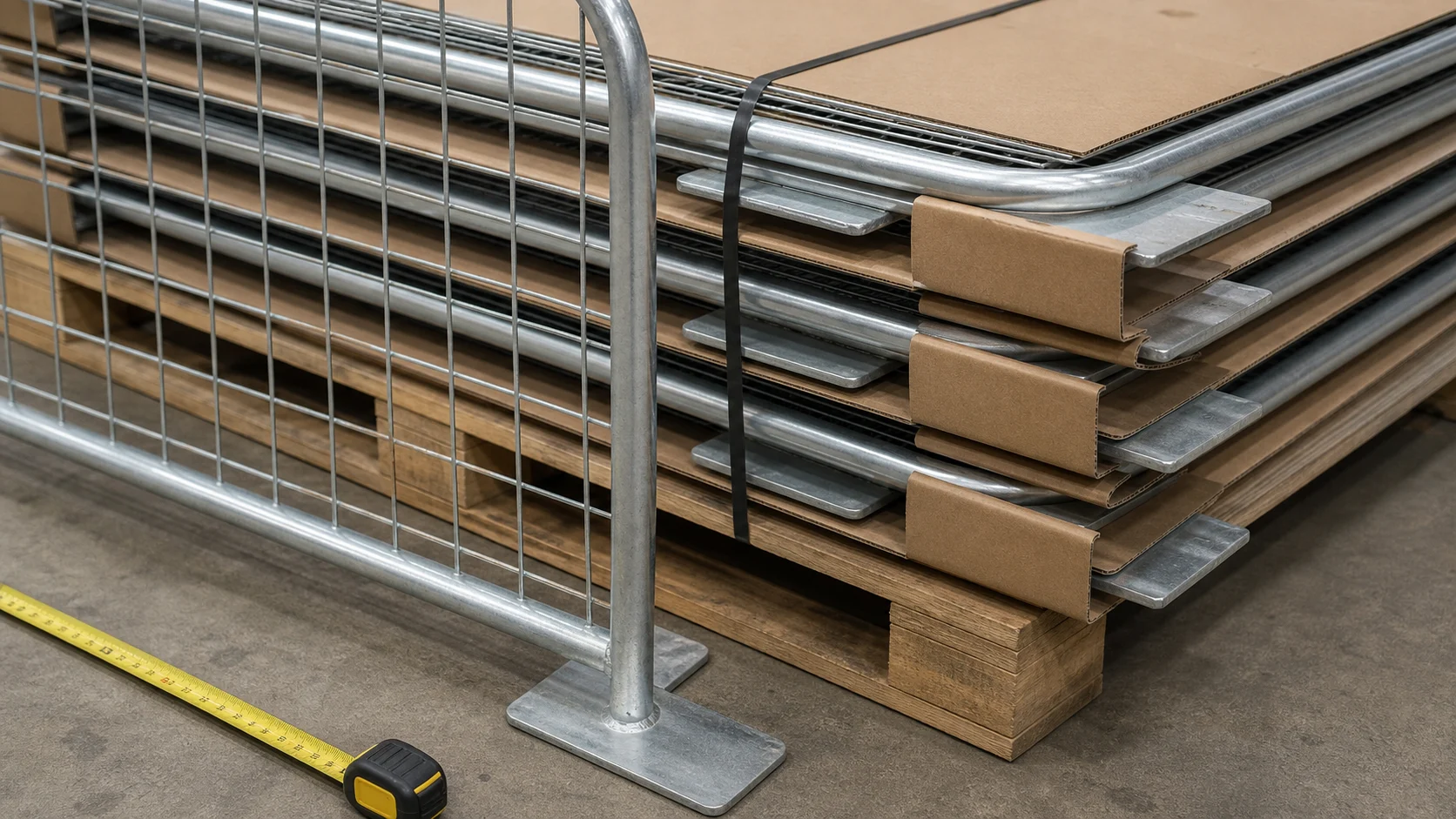
Framed panels should be prepared for transport as a stack, not treated like a bundle of loose mesh. The packing plan should consider where the frame, feet, and exposed corners need protection. Cardboard separators, edge protection, strapping, pallet support, and an agreed stack count can reduce avoidable rubbing and movement during handling. If feet or accessories are packed separately, that should be shown in the packing list and photo set.
Ask for the number of panels per stack, the number of stacks per pallet where pallets are used, the handling method, and any carton mark or barcode requirement needed for the destination. These details are particularly useful for distributors and retail supply programs that must receive, count, and move the panels through more than one warehouse.
Plan the panel line within a wider hardware purchase
Panels are relatively bulky compared with dense hardware items, so the loading plan should be considered before shipment. A buyer may source fencing panels together with wire products, garden tools, building hardware, or other product lines, but the stack dimensions, total quantity, and protection needs should be shared early. This allows the purchase to be organized around the real combination of goods instead of treating the panel line as an afterthought.
The mixed container hardware tools service supports buyers who want to coordinate several compatible product lines in one purchasing plan. Share the panel specification, required quantity, packaging request, destination market, and other items under consideration so the conversation can account for loading, protection, and receiving needs across the order.
Information to prepare for a quotation
- Installed use: temporary barrier, fencing, garden, farm, construction, or another program.
- Finished panel width and height, mesh opening, and quantity for each separate SKU.
- Wire requirement, requested galvanized or coated finish, and any appearance expectation.
- Frame construction, foot or base arrangement, accessories, and reference drawing or photo where available.
- Stack count, edge protection, strapping, pallet, carton mark, barcode, and destination handling requirements.
- Other wire mesh, garden, building hardware, or tool items planned for the same buying program.
Welded Wire Mesh Panels are best purchased against a clear installed-use and packing plan. When the buyer shares the panel dimensions, opening, wire and frame requirements, base arrangement, finish, quantity, and wider buying list, China Tools Supply can organize a practical quotation scope, sample discussion, QC photo list, and shipment plan.