
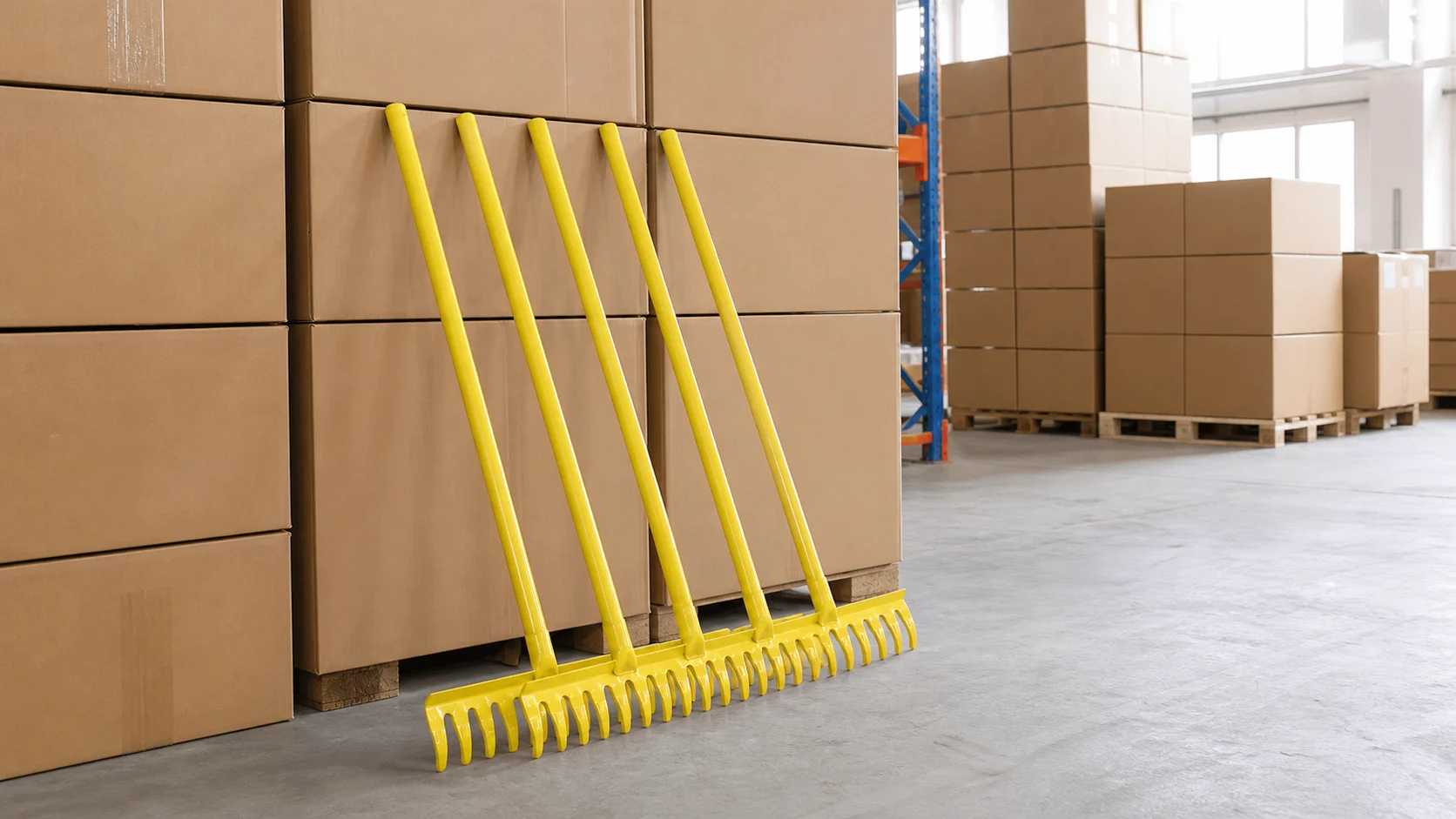
Steel Rake R104A is a finished garden-rake style for buyers planning garden maintenance, seasonal tool, and hardware supply programs. The product reference shows a yellow painted rake head with multiple curved tines and a matching long painted handle. That visible form is important: the buyer is not simply choosing a generic rake head, but a completed long-handled tool whose head pattern, handle connection, coating, carton length, and sales presentation should be confirmed together.
The Steel Rake R104A page provides the starting reference for an inquiry. The listed application is garden maintenance and hardware supply channels. A buyer should use the image to identify the selected R104A pattern, then send the required quantity, target market, handle requirement, preferred finish direction, packing request, and any destination marks. The final order should be based on the agreed sample and specification, rather than on a general description such as “yellow garden rake.”
Why a finished handled rake needs its own buying plan
Long-handled rakes bring different purchasing questions from compact head-only tools. The rake head must be recognizable, the tines must suit the intended product position, and the handle needs to be securely paired with the head in the approved finished-tool format. The completed length also affects carton design, warehouse storage, loading, and onward distribution. A quotation that only lists a rake head can leave important issues open when the buyer actually needs a ready-to-sell handled product.
Begin by deciding how the rake will enter the buyer's range. A hardware distributor may need a durable, easily identified garden-tool SKU. A garden center may care about a consistent color presentation across a seasonal collection. A retail buyer may need a unit label, barcode location, or display-ready arrangement. These are commercial choices, but they change the sample, packing, and carton information that should be confirmed before production planning.
Use the R104A image as a pattern reference, not a complete specification
The supplied product image shows the key visible characteristics: a bright yellow painted finish, a straight long handle, a crossbar-style rake head, and evenly spaced curved tines. Those points can help a purchasing team make sure that the model name, quote image, sample, and packing photo all describe the same item. They should not be used to assume unconfirmed dimensions, handle material, steel grade, tine count, weight, or load rating. Confirm such requirements against the selected order before they appear on a purchase document.
A clear inquiry can request photos from the front, back, and side; a close view of the handle-to-head connection; and an agreed measurement list for the head and overall tool. Where exact color is important, share a physical sample, color reference, or approved product photo and agree how the painted finish will be reviewed. This keeps the visual target practical without making a broad claim that every production batch will match an unapproved catalog image.
Check the rake head, tine layout, and handle connection together
The rake head is the working part that receiving teams and end users will notice first. A sample review should look at the overall head shape, tine alignment, spacing, tip appearance, and paint coverage. The tines should be checked as part of the complete head rather than as isolated pieces. A bent tine, uneven spacing, or damaged finish can affect both the look of the item and the way it is handled after arrival.
The handle connection is equally relevant for this finished tool. The buyer can ask for a close image of the connection area, a side view, and confirmation of the agreed assembly format. If the program uses a different handle option or requires local assembly, state that at quotation stage instead of assuming the yellow handled reference will apply. Keeping the head and handle decisions on the same approval sheet helps avoid mixing a correct rake head with the wrong completed-tool arrangement.
Place R104A in a broader forks and rakes range
Garden buyers often carry more than one rake or fork pattern because end users may have different preferences for tool size, handle format, finish, or intended task. The Forks & Rakes category is the right place to compare R104A with related garden-tool items. Each product should still keep its own image, model reference, packing line, and approval record. Similar tools should not be merged into one SKU simply because they share a category.
R104A is visibly different from a head-only tool and should be planned accordingly. The handle length affects the carton length and may make it unsuitable for the same carton plan as compact garden heads. If the buyer is selecting several handled tools, request carton dimensions and gross-weight information for each item before setting a loading plan. This allows the order to be organized around actual packaging instead of a category list alone.
Approve the yellow finish for the intended channel
The yellow coating shown on the R104A reference gives the product a recognizable garden-tool appearance. For a buyer selling in garden retail or wholesale channels, a painted finish is part of product presentation as well as surface protection. Sample review should therefore include clean coverage around the rake head, tines, handle, and connection area. Visible scratches, chips, uneven color, or coating damage should be reviewed against the agreed sample requirement.
Color can be managed more reliably when the buyer provides a reference and approves a sample under normal viewing conditions. It is better to describe the requested finish as an agreed yellow or market-specific reference than to rely on a generic color name alone. If labels, barcodes, hang tags, or carton marks are needed, submit them with the product reference so the packing discussion covers both the appearance and the logistics requirement.
Long-handled packing needs a separate protection plan
A completed rake needs more than a carton count. The tines, head coating, handle, and connection area can contact other tools during packing and transport. Protective paper, separators, head protection, controlled stacking, or other agreed methods can help reduce rubbing and contact damage. The correct arrangement depends on the selected tool, total quantity, carton size, shipping route, and the receiving buyer's handling process, so it should be confirmed with the sample and carton plan.
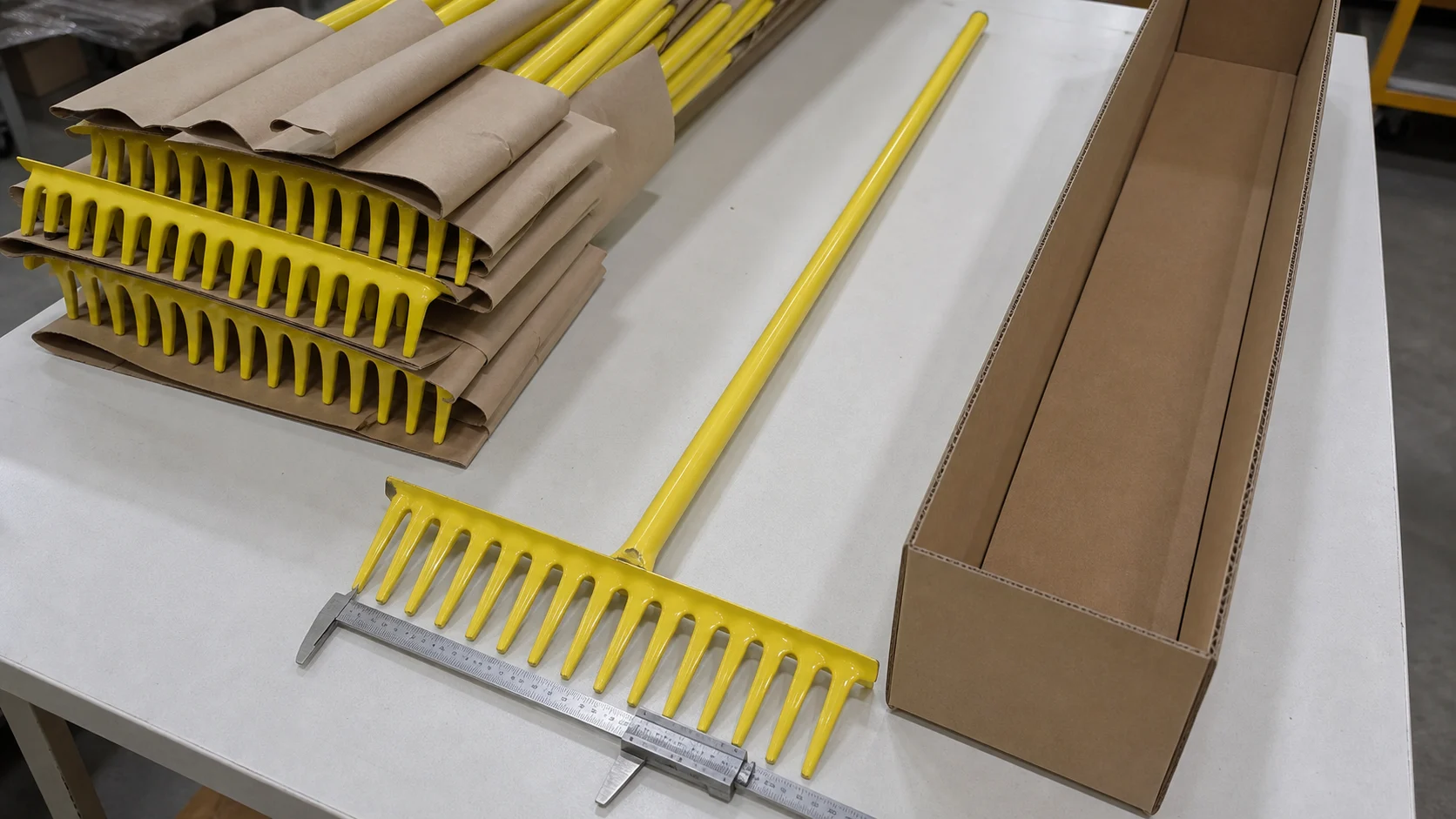
The carton plan should account for the full length of the finished tool. Ask for carton dimensions, quantity per carton, gross weight, handling marks, and loading considerations when the order includes several long-handled items. A clear carton mark allows a receiving team to identify R104A separately from other rakes, forks, hoes, or head-only products. This is helpful when tools will be distributed to several stores or unpacked into separate retail programs after arrival.
Use QC photos to document the agreed item
Pre-shipment photos can provide a simple comparison with the approved reference when they are planned by SKU. For R104A, ask for a full product view, rake-head close-up, tines, handle-to-head connection, finish appearance, and packing arrangement. A suitable measuring tool can be shown where the buyer has an agreed measurement requirement. Include carton photos and carton marks when those details are part of the purchase order.
QC photos are most useful when they answer a defined question. For example: does the head match the selected pattern, are the tines presented consistently, does the handle match the agreed finished-tool format, and is the protective packing consistent with the approved plan? A set of random warehouse images is less valuable than a small, organized record that lets the buyer compare the shipment with the sample and order sheet.
Keep R104A distinct from other rake models
The earlier Steel Rake R102 buying guide covers a different rake pattern and a different reference finish. It is useful for buyers building a wider garden-tool assortment, but R104A should keep its own approved image, handle arrangement, finish, packing specification, and SKU line. That separation supports clearer reorders and helps the buyer avoid receiving one rake pattern when another was intended.
When comparing several garden rakes, list the model code, finished-tool or head-only status, image reference, requested dimensions, finish, packing, and target quantity for each line. This makes the quotation easier to review and prevents a broad category description from hiding meaningful differences between the tools. It also creates a better record for future seasonal purchases.
Combine R104A with a practical garden-tool order
R104A can be included with compatible garden, agricultural, construction, or related hardware items when the buyer shares the product list early. The mixed-container hardware service helps buyers coordinate several categories in one practical purchase program. Each item remains independently specified, while carton dimensions, protection needs, and loading sequence can be reviewed across the order.
For a Steel Rake R104A quotation, send the selected model reference, target market, expected quantity, required finished-tool format, preferred yellow finish or color reference, packing expectation, carton marks, and any additional items planned for the same order. With that information, China Tools Supply can organize a clear sample discussion, packing review, QC photo list, and export plan based on the buyer's actual requirements.