
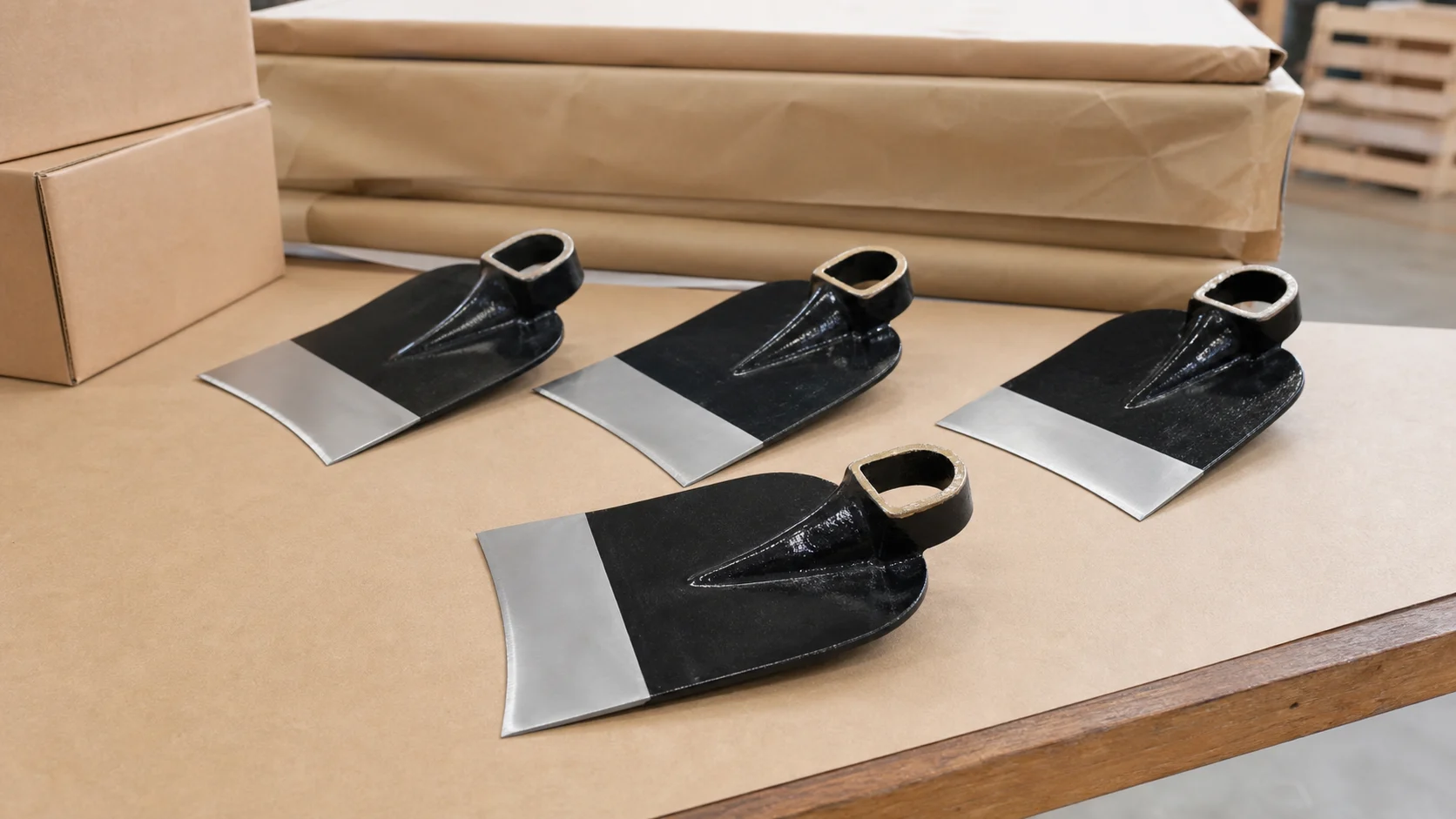
Steel Hoe H301 is a head-only agricultural tool item for buyers who want to build a practical hoe range for farm supply, weeding, chopping, and soil-work channels. It should be quoted as a separate hoe-head SKU, not as a complete handled tool unless a matching handle arrangement has been agreed. That distinction affects the product reference, the measurements to confirm, the way the goods are protected in cartons, and the information a distributor needs before fitting handles or selling the product.
The Steel Hoe H301 product record is a useful starting point for an inquiry. The visual reference shows a black-finished forged hoe head with a broad working blade, a lighter polished blade edge, and a raised handle eye. These visible features help identify the H301 style, but they do not replace an agreed specification. Buyers should confirm the selected pattern, requested size, eye dimensions, finish direction, quantity, and packing before approving a sample or placing an order.
Start by confirming that the order is for a head-only hoe
A head-only hoe gives importers flexibility. Some buyers already have a local handle source, while others want to arrange compatible handles as part of a wider tool program. In either case, the product should not be described as ready for use with an unspecified handle. The handle eye is the connection point that needs to match the chosen handle shape and fitting method. A request should state whether the buyer needs heads only, a compatible handle option, or a combined finished-tool discussion.
For head-only orders, ask for the internal eye profile and the handle reference early. A photo of the handle end, a drawing, a sample, or agreed dimensions can prevent a later mismatch. It is also sensible to identify whether the buyer plans to wedge, press, or otherwise secure the handle according to its own market practice. China Tools Supply can organize the product discussion around the selected H301 reference, but the final fit should always be confirmed against the intended handle rather than assumed from a catalog image.
Keep the H301 reference separate from other hoe patterns
A hoe range may contain several blade widths, neck shapes, eye styles, and finishes. The Hoes category helps buyers compare related agricultural hoe heads, but each pattern should have its own item line and reference approval. Similar names do not guarantee the same blade shape, fitting point, unit weight, packing method, or retail position. Treating multiple patterns as one generic hoe can create the wrong expectation for the receiving team and end users.
When comparing H301 with another model, use front and back photos, a side view of the eye, and a simple list of the requested dimensions. The broad blade and handle eye shown on the H301 reference are useful visual checkpoints. Buyers should also confirm whether the required finish is painted, polished, or another agreed market direction. No steel grade, hardness, weight, or performance result should be copied from a different hoe model unless it is confirmed for the selected H301 item.
Choose the commercial position before requesting a quotation
H301 can be considered for agricultural shops, farm supply distributors, seasonal tool assortments, and wholesale hardware programs where weeding, chopping, and soil work are part of the end-use range. Before asking for a price, define who will use the product and how it will be sold. A bulk buyer may prioritize carton efficiency and reliable identification, while a retailer may need a defined handle program, unit presentation, barcode placement, or a simple product label after local assembly.
The request should separate confirmed information from open choices. For example, state the required model, planned quantity, destination market, head-only or handled format, preferred finish, and requested packing. Then list what still needs confirmation, such as eye dimensions, handle supply, carton quantity, or private-label presentation. This keeps a quotation practical and reduces the chance that a price is approved for one configuration while the purchase order later requires another.
Use a sample to check shape, fitting, and blade presentation
A sample review is especially useful for a hoe head because fitting and presentation are both relevant. The buyer can compare the approved H301 shape with the intended handle, inspect the handle eye, look at the blade profile, and confirm whether the finish is suitable for the planned sales channel. If the buyer will supply handles locally, the sample should be fitted and evaluated under the buyer's own assembly method before bulk order approval.
The sample discussion should include packaging rather than treating it as a separate afterthought. A broad metal blade can rub against nearby heads during domestic handling or export transport if the carton arrangement is unclear. Agreeing a reference for edge protection, separators, bundle quantity, carton quantity, and carton marks gives the receiving warehouse clearer expectations. The exact packing method depends on the chosen size, finish, route, handling requirements, and total order, so it should be confirmed rather than assumed.
QC photos should make the head-only form easy to verify
A useful pre-shipment photo set does more than show a stack of tools. It should let the buyer identify the selected H301 model and compare it with the approved reference. Request a clear view of the blade face, the back of the head, the handle eye, the blade edge, finish coverage, and the selected protective packing. Where a measurement is important, a photo with a suitable measuring tool can document the agreed reference point. Group the images by SKU when several hoe patterns or sizes are in the same order.
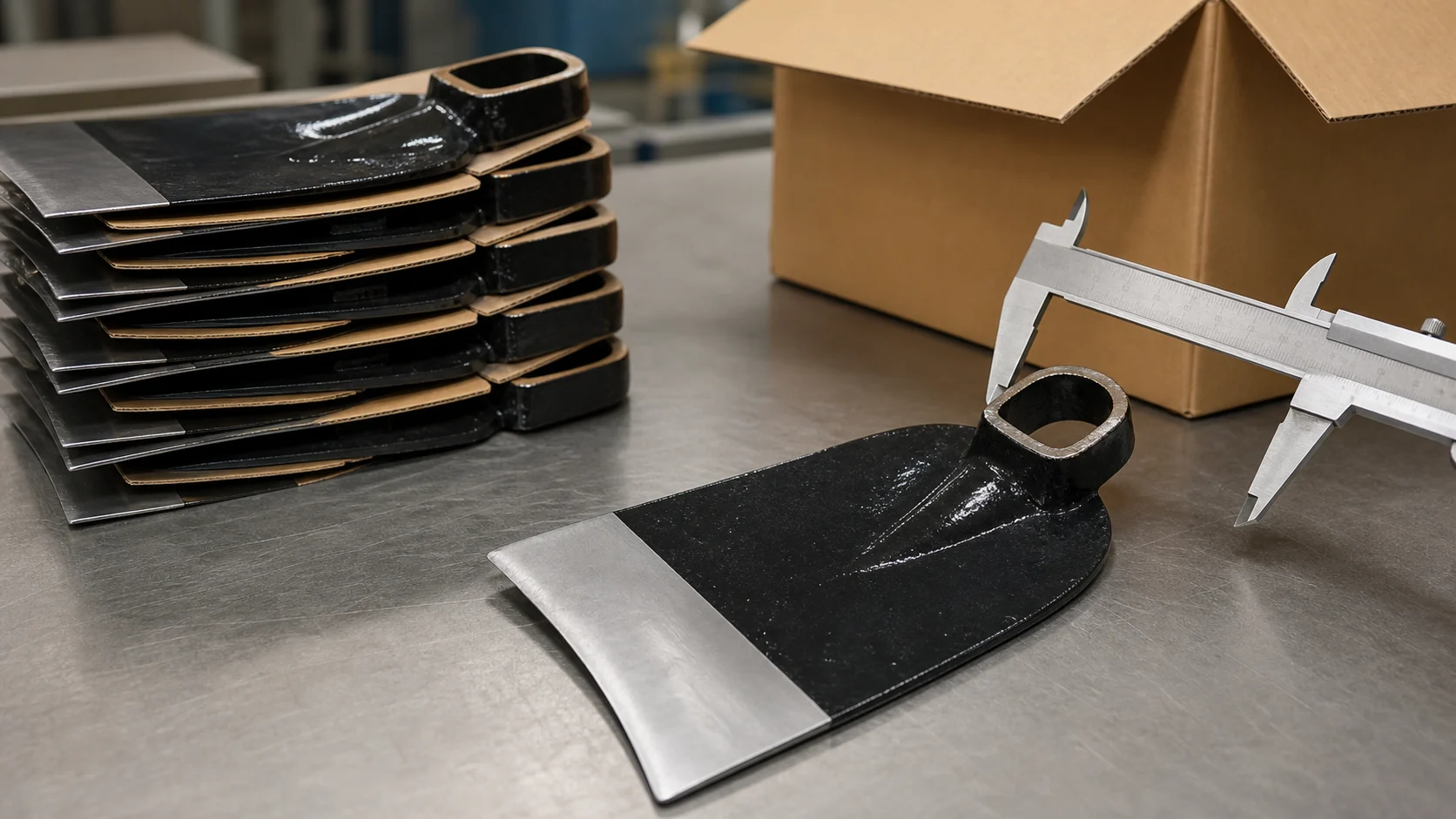
For a head-only hoe, the inspection record should be aligned with the buyer's real concerns: correct pattern, suitable eye shape for the planned handle, acceptable blade appearance, consistent finish, and protective packing that helps avoid contact damage. A photo cannot replace an agreed quality standard, but a planned photo list gives both sides a simple way to check that the shipment matches the approved item and packing arrangement.
Plan protection and carton handling around the working blade
The working edge needs attention during packing because an unprotected metal blade can mark adjacent parts, scratch the finish, or affect retail presentation. Paper interleaves, simple edge guards, separators, bundles, or other appropriate protection can be considered according to the selected item and packing format. The aim is not to prescribe one universal packing method; it is to ensure the buyer approves a method that suits the product, carton count, transport route, and destination handling plan.
Carton marks should identify the item in a way that receiving staff can use: model reference, quantity, destination marks, and any agreed order information. If the order includes several hoe models, do not rely on a broad description such as “farm tools.” Keep each H301 carton and packing record identifiable. This is particularly important when buyers are building an assortment and the goods will be unpacked, fitted with handles, relabelled, or redistributed after arrival.
Build a hoe range without treating every model as the same item
Buyers expanding an agricultural range may include more than one hoe shape for different local preferences. The earlier Steel Hoe H304 buying guide covers a related hoe-head sourcing process from a different product angle. Reviewing both references can help a purchasing team keep individual model photos, fitting details, quantities, and packing requirements distinct instead of merging every hoe into one unclear line.
When two or more patterns are being considered, create a small approval sheet for each SKU. Record the model name, image reference, requested size, handle arrangement, finish, unit packing, carton quantity, and sample status. This is more reliable than moving from a general product family to a bulk order without preserving the individual product decisions. It also helps the buyer compare the commercial role of each hoe pattern before deciding which items deserve stock allocation.
Combine agricultural tools with a practical wider order
Agricultural hoe heads do not have to be purchased as an isolated shipment. A buyer can combine compatible product lines when the carton sizes, packing requirements, and loading sequence are reviewed together. The mixed-container hardware service is intended for buyers planning a practical selection of agricultural tools, garden tools, construction hardware, cutting consumables, or related items within one purchase program. Each SKU remains separately specified, while the overall order can be organized around a workable container plan.
For a Steel Hoe H301 inquiry, prepare the model reference, desired size, head-only or handle requirement, target market, quantity, packing preference, carton marks, and any other products planned for the same order. With those details, China Tools Supply can scope a clear quotation, sample review, packing discussion, QC photo list, and export plan without overstating specifications that have not yet been confirmed.